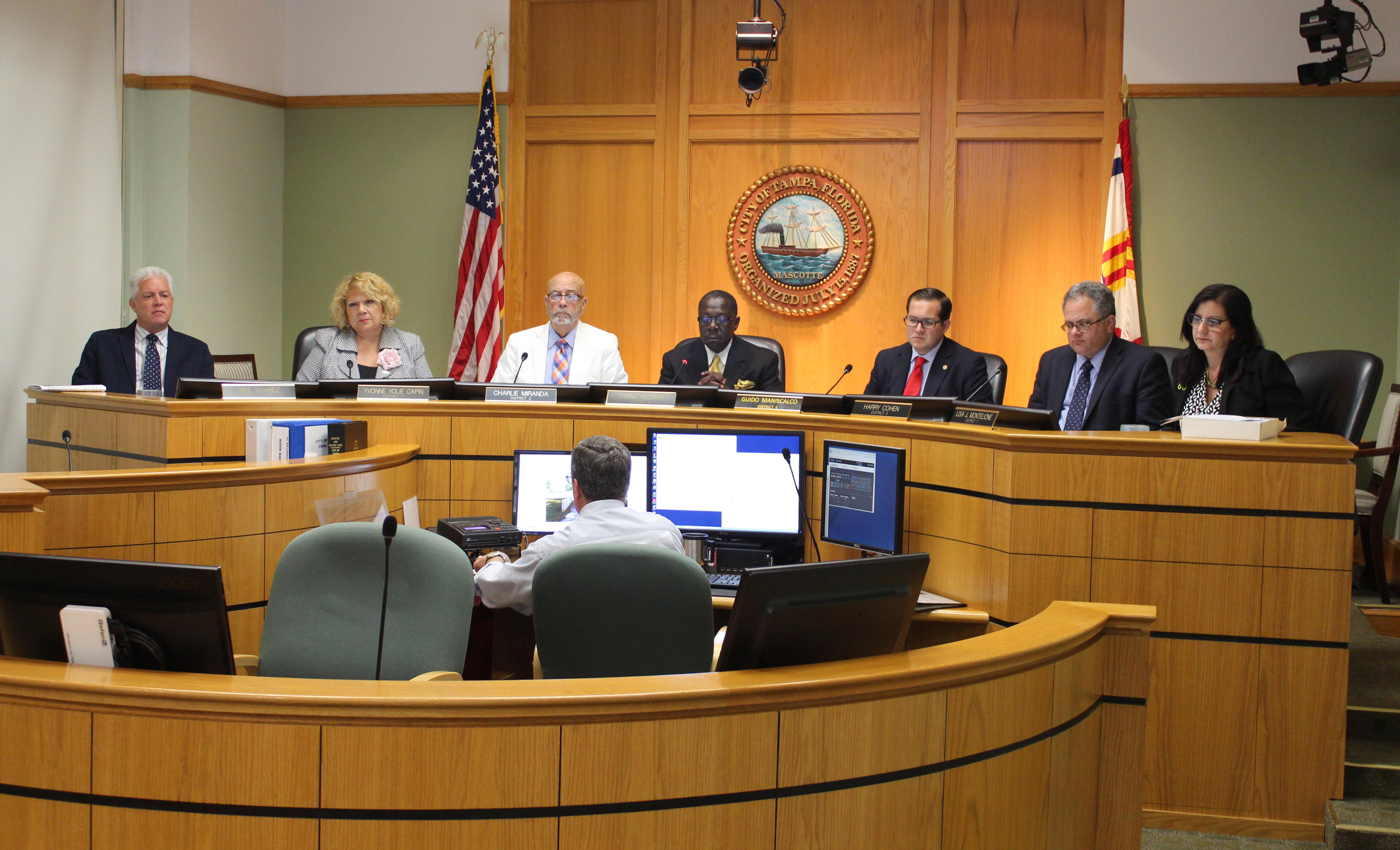
To say that Tampa Mayor Bob Buckhorn‘s executive order he signed last Friday creating a Civilian police Review Board (CRB) that would allow him to control all but two of the 11-member board has not been warmly received by all parts of the community — or the City Council — would be a massive understatement.
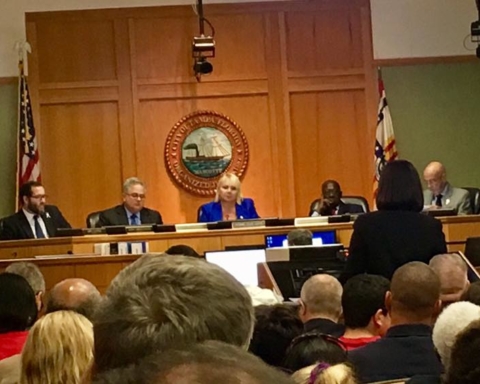
With City Attorney Julia Mandell and City Council Attorney Marty Shelby at loggerheads about whether the city’s Charter allows the Council — and not the mayor — to have the authority to name members to such an agency, all sides agreed today that Mandell will select an independent attorney who will come before the Council in two weeks to ultimately decide if Mandell has a conflict of interest in siding with the mayor.
On a separate vote, the Council voted 6-1 to agree to workshop a proposal by Chairman Frank Reddick that would allow the Council to select seven members to the 11-member board, with Buckhorn having the power to name the four other members, two to the board with two alternates.
If an independent attorney says that the Council has the power to control who sits on the CRB, it appears that there would be enough votes to pass that ordinance. But with Buckhorn likely to veto that measure, the likelihood that there will be five members to override that veto is questionable.
Councilman Charlie Miranda made it clear that he would not support any proposal diluting the mayor’s power, saying it would tear apart local government. He said the public could ultimately choose to give the council more power through changing the Charter, but he would not accept changing it on the board.
Two other board members who today voted to support Reddick’s proposal — Mike Suarez and Harry Cohen — also seemed to leave open whether they would vote to override a potential Buckhorn veto. Cohen in particular made it clear that he had concerns about a civilian review board not having the support of the mayor, but voted to support the motion today because the Council will only be discussing the Reddick proposal in a workshop on September 24.
Perhaps coincidentally, both Suarez and Cohen have often been mentioned as potential mayoral candidates in 2019 after Buckhorn is term-limited out of office. For his part, Suarez said “if the mayor had consulted with us I don’t think we would have much a problem right now.” Buckhorn earlier this week was quoted as saying that if the Council wanted more control, they should have contacted him.
The Council had informed Tampa Police Chief Eric Ward last month that they wanted him to come back today to come up with proposals for a viable CRB after reviewing the hundreds that currently exist in cities across the country.
The plan that Buckrhorn and Ward came up with last week is modeled on a CRB that the city of St. Petersburg employs. That board, originally created in 1991, has nine members, all chosen by the mayor. It does not have a subpoena power.
Councilwoman Lisa Montelione questioned Ward on why he thought St. Pete was the best model for Tampa. Ward was unprepared to answer that question. She then called on the department to find out how many cases had been brought forward to its review board in recent years, how many recommendations it made, and how many were implemented.
After a lunch break, Assistant Chief Brian Dugan came back with some statistics for the Council. He said there had been 208 cases brought forward by St. Pete’s Civilian Review Board over the past six years. There had been seven recommendations, but he did not have further information. He said he would provide that on September 17.
For nearly two hours in the morning, the Council heard from dozens of citizens who spoke critically of the Tampa Police Department and Buckhorn for the way he went about creating the CRB.
The most poignant comments were made by friends and family members of Tampa resident Jason Westcott, a 24-year-old Seminole Heights resident with no criminal convictions whom a SWAT team killed during a drug raid that found just $2 worth of marijuana back in May of 2014.
“I want accountability,” said Patti Silliman, Westcott’s mother. “Somebody needs to be held accountable for what happened to my son.”
“We need a Civilian Review Board to police the police because they lied ever since the get-go,” said Israel Reyes, who lived with Westcott and was in the house when the SWAT team killed his roommate. “As a result, Patti Silliman had to stand outside in front of the Tampa Police Department with a sign asking one question: who was going to hold the Tampa Police Department accountable for killing her son? That’s something that no mother should have to go through.”
“I honestly hate keep coming to these things and keep talking, because I have to relive that moment continuously,” said Arthur Green III. His father, Arthur Green Jr., died at the hands of TPD officers in 2014 after suffering from a diabetic seizure while being detained by police during a traffic stop for driving erratically. “And for you to do this and for the mayor to do this shows his continual disrespect and not caring about the people in the community.”
“How are we supposed to know those people aren’t going to be biased? How are we supposed to know that [they are] really going to have our issues and our concerns really heard?” asked East Tampa resident and USF student Chynnah McFadden.
The Florida ACLU has been unsuccessful in calling for the U.S. Department of Justice’s Civil Rights Division to review the TPD in the wake of the Tampa Bay Times story about “biking while black” that appeared back in April. (The DOJ’s COPS program instead has done the investigating.)
After the meeting concluded, the group’s Joyce Hamilton Henry said in a statement, “We hope that the city council understands from the reaction at today’s meeting that the current proposal falls well short of what the community needs and is demanding when it comes to accountability for law enforcement. A truly independent civilian review board should have the authority to conduct its own investigations, give policy recommendations, and make determinations regarding discipline. A body that can only review the conclusions of the department’s internal investigation is not an independent oversight body – it’s dangerously close to a rubber stamp.”
The drama will resume back in Council chambers later this month.