One argument used consistently by House Republicans in Florida over the past three years to explain why they’ve rejected Medicaid expansion is that they say the federal government will renege on its financial promises.
The Obama administration has said that any state that accepts Medicaid funding to help insure more people under the Affordable Care Act will have the first three years of the program paid for exclusively by the feds, with the state having to chip in just 10 percent of those costs afterwards.
But last month the nation’s Medicaid chief said at an Orlando conference of health officials that there was “no way” that Florida’s Low Income Pool program, which funds hospitals and health clinics for medical care of low-income and uninsured patients, will continue, at least not in its present form. Since then, the state Agency for Health Care Administration and the Obama administration have been negotiating behind the scenes about a possible extension of the program, with changes being made.
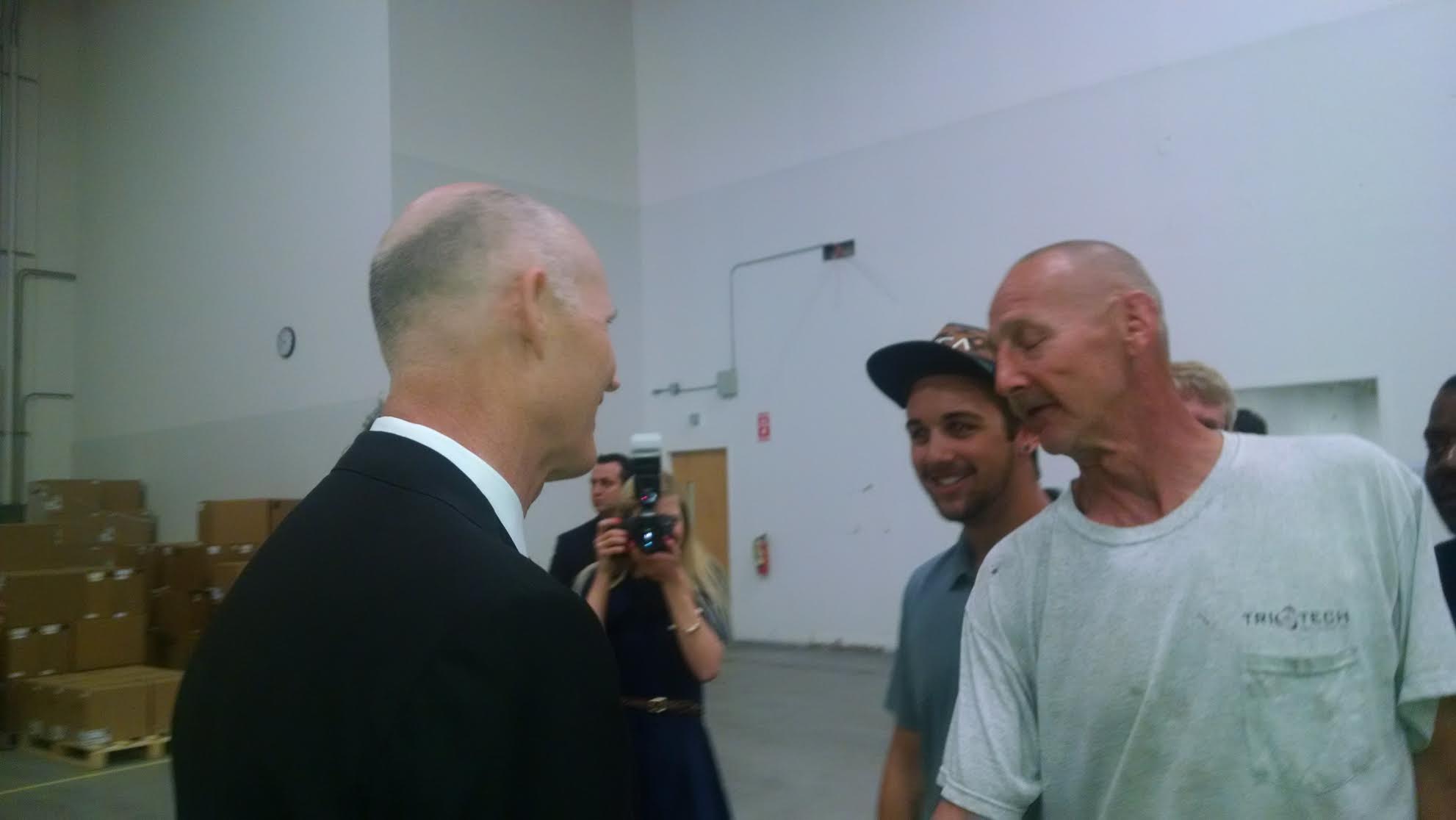
On Wednesday Gov. Rick Scott wrote to President Obama, saying that the state would not pick up the costs of the program if the feds decline to renew funding. And in St. Petersburg this morning, he said it was an example of the feds dropping the ball — even though the state was asked a year ago to study its Medicaid financing system and find ways to increase transparency to make sure the money is being spent appropriately.
“Here’s one thing that’s frustrating,” the governor said this morning to reporters after speaking at a ceremony hailing Jagged Peak, an ecommerce company located off of Gandy Avenue that has added 35 new jobs in the last four years. “The federal government often starts a program – and remember, they’re funded with our state tax dollars…now what they’re saying is, well, they’re not sure they’re going to continue to it.”
Scott then repeated that it’s a federal program funded by Florida taxpayers.
“I’ll be very, very, very disappointed if they don’t continue it,” he said, though he didn’t respond to our question about whether he believed or not if the state expanded Medicaid the feds would then go ahead with the funding.
“Now we’ve turned our economy around, and we’ve turned our budget around,” he said. “We’re going to have record funding per pupil for K-12 education. We’re going to invest in our environment. We’re going to invest in transportation. We’re also going to reduce taxes, that’s how we’re going to spend our money, and I expect the federal government to continue to fund the programs that they start.”
Democrats have criticized the governor for already placing the $1.3 billion expected in LIP funds into his $77 billion budget he presented earlier this year.
According to an analysis by the Safety Net Hospital Alliance of Florida, the state’s six statutory teaching hospitals — such as Tampa General Hospital — risk losing nearly $600 million a year in funds if the LIP program ends with no successor plan in place on June 30. TGH would lose over $85 million.
Yesterday Tony Carvalho, president of the group, said, “Simply put, the elimination of $2 billion without an agreed-upon alternative funding would jeopardize health-care services for millions of low-income Floridians and cause a financial crisis within our health-care safety net.”