Now, the challenge changes.
Now, the Bucs have to be worth watching.
Otherwise, the Sunday afternoon movie is still going to be awfully tempting.
While most of us weren’t looking, the NFL blacked out its own blackout rule a couple of weeks ago. The natural enemy of the TV-watching football fan is finally dead. There is no longer any reason to fear that this week’s game, or next week’s, won’t be on television.
For local markets where the team is not 2-14, we can assume that is good news.
For local markets like this one, you might want to risk watching with one eye.
Over the years, local blackouts have been the consternation of the NFL football fan. Since 1973, when the blackout law went into effect, a game that didn’t sell out 72 hours in advance was not going to be shown over the local airwaves. That meant your game-viewing was largely up to a great deal of strangers and whether they decided to buy a ticket.
But times change. Congress was muttering about anti-trust violations, and the league, which had softened the blackout rule in 2012 to allow teams to show the game if they had sold to 85 percent of capacity, in essence threw up its hands. You want to see football. Fine. See football.
After all, this is no longer 40 years ago, when teams relied on ticket sales for a lot of its revenues. In those days, there were men such as former Dolphins’ owner Joe Robbie, who steadfastly refused to acknowledge a non-ticket buying fan as one of his customers, no matter how many caps or jerseys the guy might buy. There were the folks inside the stadium, and there were the folks outside of it. That was clear enough for men like Robbie, who once told The Miami Herald that all games would still be blacked out if it were up to him.
The logic was this: Local concerts aren’t shown on free TV. First-run movies aren’t shown on free TV. Why do people have a right to see a sporting event?
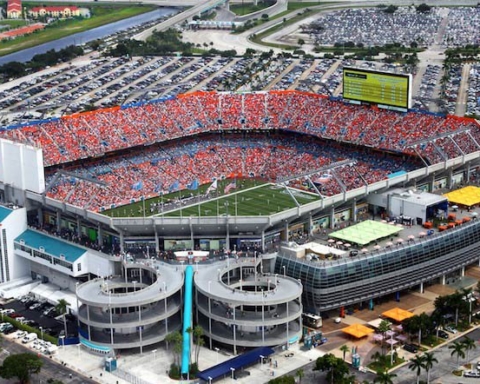
Critics argued back that losing had a lot more to do with empty seats than ticket sales. The Bucs’ fortunes certainly reflect that. They went a dozen years from 1997-2009 without a blackout, and then the bottom fell out. In-stadium attendance started to fade, and then the ticket windows went ignored.
Meanwhile, local TV sets were usually dark. The Bucs have spent most of their history as a bad football team. At one point, the Bucs had 19 out of 23 home games blacked out according to Bleacher Report.
Then things changed. The Bucs haven’t had a blackout since the first game of the 2012 season. Now, eyesight tells you that a lot of those crowds were far less than the 85 percent of capacity that the league had gone to, but when the game is free, who is going to quibble?
The point is, there really aren’t a lot of NFL markets where the blackout rule is even a consideration. According to NFL.com, there were no blackouts last year, and only two — Buffalo and San Diego — in 2013. Half the league has not had a blackout since the 90s.
Here, there won’t be any more, either.
That’s a good thing. We think.