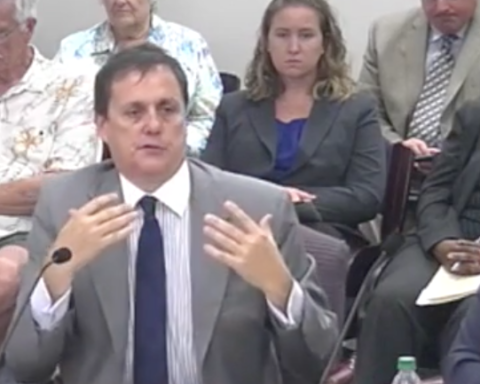
The City of St. Pete will buy the Carter G. Woodson African-American History Museum. Mayor Rick Kriseman announced he will work with City Council and staff to begin the process.
The first step is figuring out how much to pay for the Midtown building.
“There’s a lot to do and it will not happen overnight,” Kriseman said.
Next steps also include figuring out how to pay for the building once a purchase price is determined. The city will also have to draft a leasing agreement with the museum
The announcement comes after months of worry that the museum would close. In January, the building’s owners, the St. Petersburg Housing Authority, voted to sell the property in order to pay for other housing projects. The museum currently only pays $100 a month to occupy the property at 2240 Ninth Avenue South.
Just last week, however, the U.S. Department of Housing and Urban Development told city officials as well as the St. Pete Housing Authority and the Carter G. Woodson African-American History Museum that the property must remain a museum.
It was secured in the late ’90s as part of a $27 million federal HOPE VI grant.
Kriseman’s announcement was an emotional one. Members of the community came out in full force against shuttering the museum. One of the loudest critics of a possible sale was longtime St. Pete activist Mama T. Lassiter. She shouted through tears of joy as Kriseman announced he was planning a purchase.
“Thank you, Jesus,” she shouted as she waved a ribbon around from her chair. “Oh, Kriseman, I love you.”
Others in the crowd filled with community activists and pillars like former Police Chief Goliath Davis and City Council candidate Lisa Wheeler-Brown roared in applause.
“It’s about each of the places and most importantly the people it honors and serves,” Deputy Mayor Kanika Tomlin said leading up to the announcement. “It is about our community and the important story of this corridor.”
The museum’s history dates back to at least 1939, when HUD first started working with the community to restore blighted and unsafe neighborhoods in the city’s core.
Selling and possibly closing the museum was never an option welcomed with open arms, rather one of necessity. As Tomlin pointed out, the needs of the St. Petersburg Housing Authority have changed over time.
The agency lost $2 million in funding during the last round of sequestration at the federal level. And according to housing authority CEO Darrell Irions, every time the agency opens enrollment for section 8 housing they receive some 3,000 applications per day. The flood of enrollees forces the agency to only open enrollment for one or two days at a time.
“Every dollar counts,” he said, lauding the city’s commitment to purchasing the building in order to meet the needs of both the housing authority and the museum.
But despite the seemingly gleeful nature of Tuesday’s announcement, the issue doesn’t come without controversy. Because the museum was originally opened using money from a federal grant, some argue a city purchase is charging taxpayers twice.
“The HOPE VI dollars were used for this project along with other projects but that’s, obviously it’s federal dollars,” Kriseman reluctantly fired back.
He pointed out that this wouldn’t be the first time the city has used its assets to house cultural resources. The St. Petersburg History museum, Mahaffey Theater and Great Explorations are all operated in city-owned property.
The meeting was also attended by three City Council members who were all smiles over the announcement – Darden Rice, Charlie Gerdes and Bill Dudley. Members of the Carter G. Woodson African-American History Museum board were also there. In all, some 100 supporters from the community crowded the museum’s front lawn for the announcement.
Kriseman did not say how much the city expects to pay for the building or when a deal might be closed, but said negotiations would start soon.