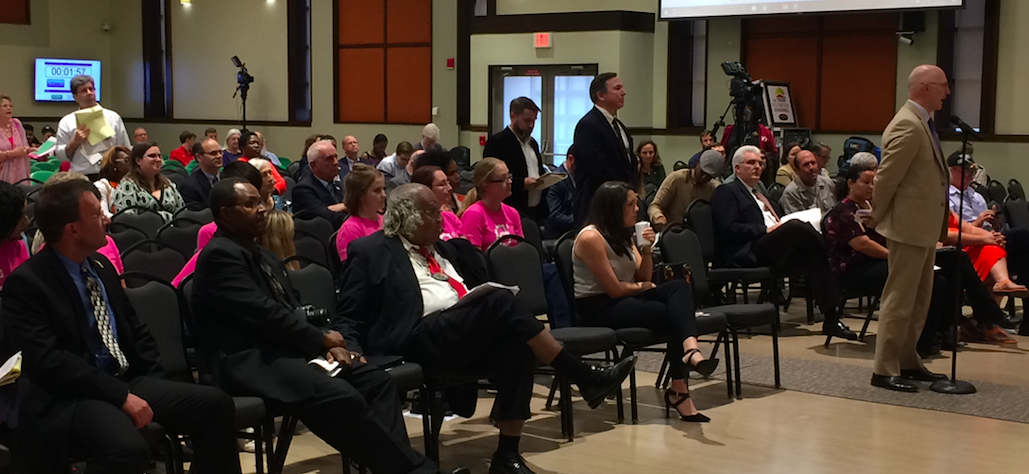
The Senate Judiciary Committee voted favorably a measure that would regulate Transportation Network Companies like Uber and Lyft.
The proposed bill requires $1 million in insurance coverage for ride-hailing drivers provided either by the individual or by the company. Currently, laws vary from location to location and often leave drivers carrying only private automobile coverage that would not apply while using their vehicle for hire.
The provision is similar to a bill passed in the House, but omits several items included in the House version. For example, the House Bill would also vest regulatory control at the state level leaving local bodies preempted from creating their own regulations.
The House version would also require background checks for drivers.
Though the Senate Bill has cleared one more hurdle before reaching the Senate floor, the issue as a whole may be in trouble. The vote paves the way for a potential impasse between the two chambers with the Senate appearing to be only interested in advancing its version.
Senator Arthenia Joyner voiced her concern for the lack of protection included in the Senate Bill.
“To me public safety is equally as imporitant as insurance.,” Joyner said. “How is it that you can divorce the two?”
Bill sponsor David Simmons explained the bill is a first step in the process and other issues could be dealt with later.
“…until we can get the stakeholders to reach agreement,” he said.
But that agreement seems unlikely. Companies like Uber and Lyft have long been battling it out with the taxi lobby over how to fairly regulate ride-hailing companies. The Taxi companies argue Uber and Lyft should be forced to provide the same level of insurance on their drivers and cars as Taxis do.
Senator Jeff Brandes who has long backed a deal that would keep Uber and Lyft up and running proposed an amendment that was squashed by the committee and vehemently opposed by the Taxi lobby.
It would have reduced the amount of coverage required on for-hire cars like Uber and Lyft during times when they were on the grid, but not actively transporting a customer. Brandes argued that change to the bill would allow the insurance industry to create specific policies for such companies. That’s something he argues wouldn’t be possible under the bill’s current language.
His amendment was supported by a spokesperson for Uber.
Despite the amendment’s failure, the bill’s passage was still applauded by the Property Casualty Insurers Association of America.
“PCI and our members support most of the provisions provided for in Senate Bill 1118 and our goal is to arrive at a solution that protects the public with reasonable insurance requirements for Transportation Network Company (TNC) drivers from the time the app is turned on to the time the app is turned off,” PCI state government relations regional manager Logan McFaddin said. “Currently in Florida there is a gray area regarding coverage that could leave drivers and passengers at financial risk if there were an accident. Personal auto insurance policies are not intended for commercial use and will not cover damages if it’s determined the driver was using their vehicle for hire. Transportation network company drivers need to know that if they are operating under their personal auto insurance policy, they might not have the proper insurance coverage in place to protect them.”
Another amendment filed by Brandes, however, was approved with the support of Taxi companies. It would require Uber to provide digital notification to users that rides pre-arranged outside of companies’ digital platforms is illegal. Those behind the scenes transactions would also make void any insurance policies obtained under the proposed regulation.