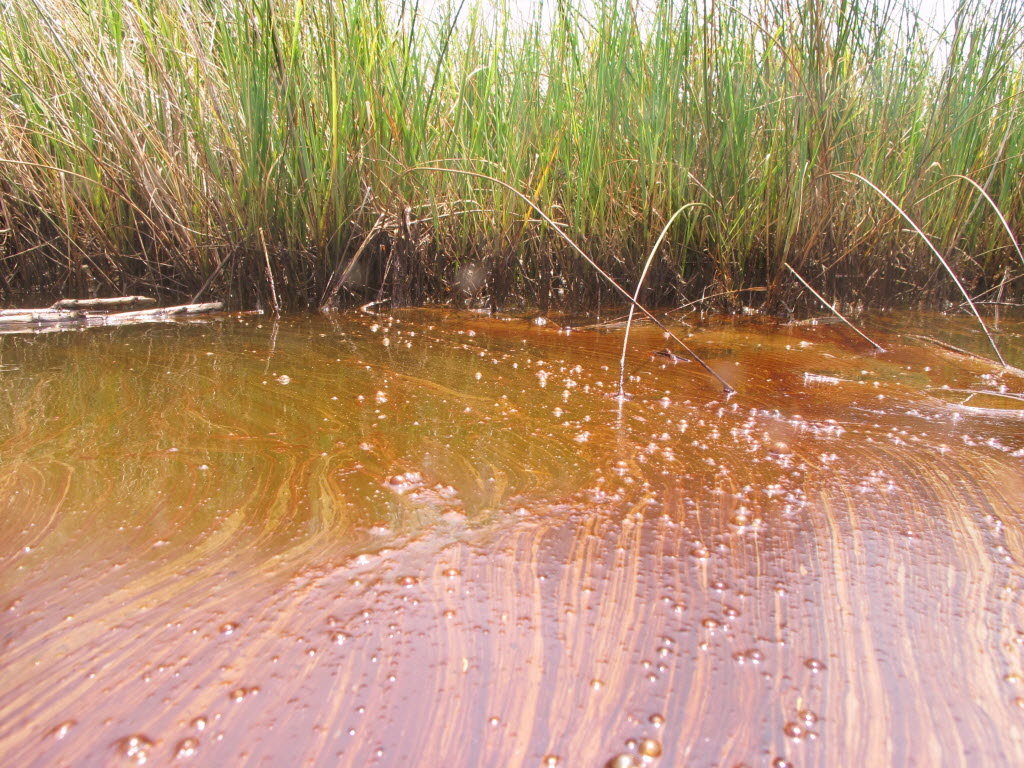
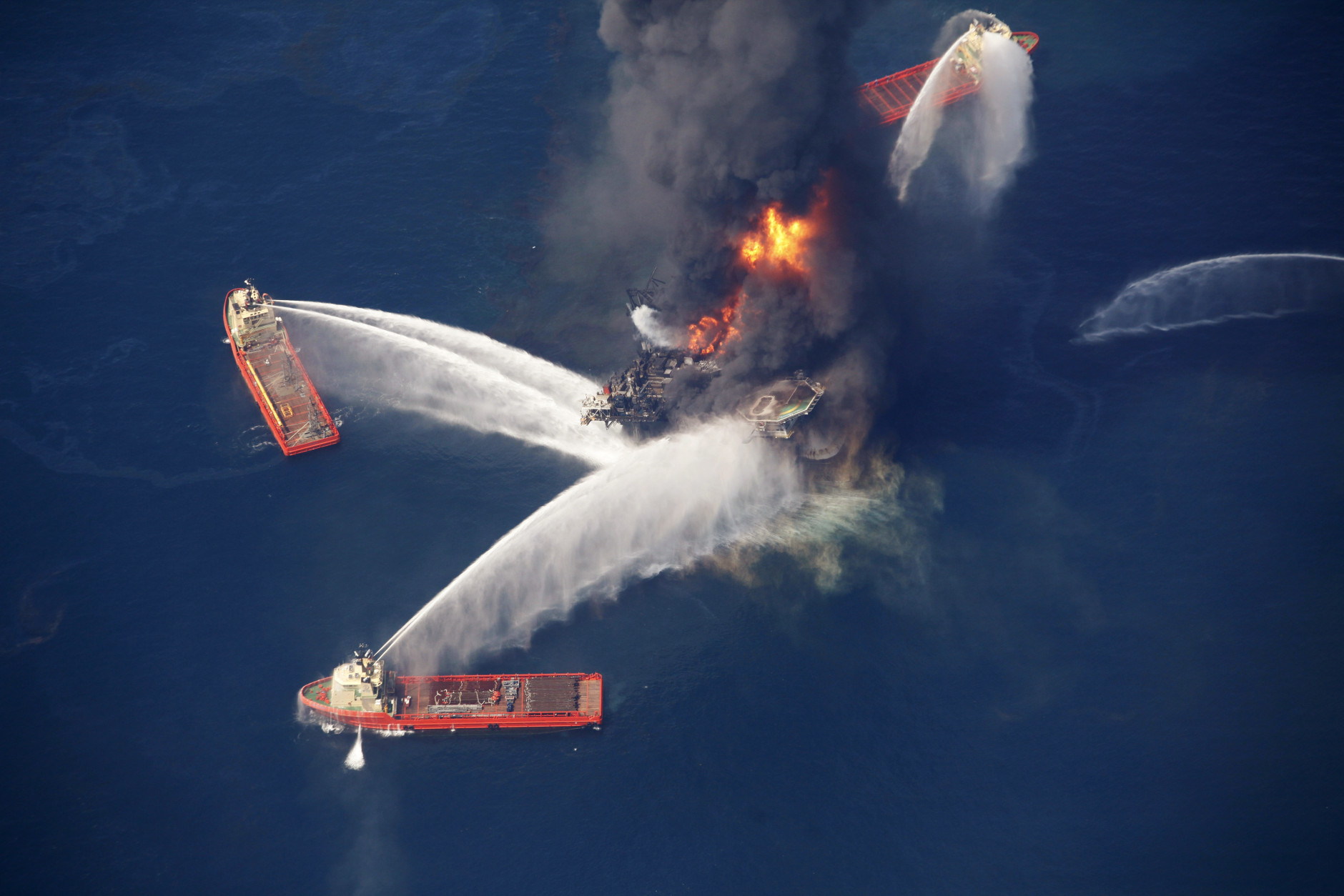
Five years after 11 people lost their lives on the Deepwater Horizon oil rig and the Macondo oil well began leaking more than 200 million gallons of oil into the Gulf of Mexico, questions still remain about the environmental effects of the largest oil spill in history.
BP committed $500 million over a 10-year period for scientists to independently study the effects of the spill and conduct crucial research to help mitigate future spills.
By the end of this year more than $200 million will have been allotted to research.
Yet much is still unknown.
Scientists at the University of South Florida and the Florida Institute of Oceanography have partnered with other researchers and institutions to form GoMRI – the Gulf of Mexico Research Initiative.
They have conducted more than 500 expeditions, met more than 300 times and presented information and remaining questions some 1,800 times. They’ve produced more than 400 peer-reviewed articles and hosted nearly 2,000 outreach activities and media opportunities.
Despite the massive efforts so far, and the millions of dollars in research initiatives, scientists still do not fully know the effects of the spill.
For starters, long-term effects of oil spilled into the Gulf have not even begun to be apparent, partly because a lack of baseline data pre-dating the spill isn’t available for comparison.
The biggest question still plaguing researchers in regards to the BP spill is whether or not responses to the spill caused their own set of environmental hazards.
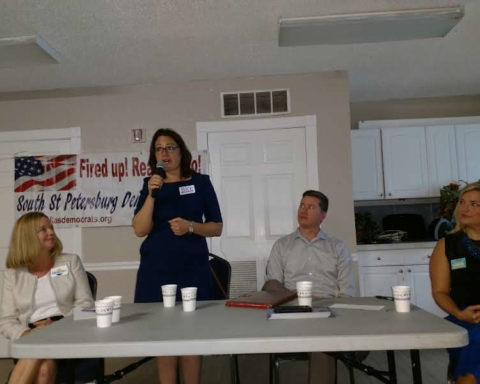
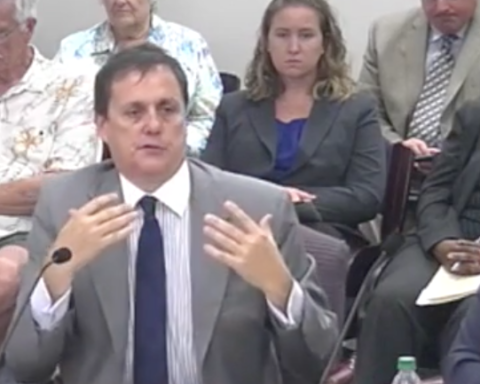
“Could it be that the response is worse than the disease,” probed Dr. Steven Murawski at a panel in USF St. Pete’s downtown marine science lab.
Murawski is a population dynamics and marine ecosystem analysis professor at USF’s College of Marine Science. He serves as director of the Center for Integrated Analysis and Modeling of Gulf Ecosystems, or C-IMAGE. That program is funded through GoMRI.
The response to the 2010 oil spill included three main mitigation methods – surface burning, dispersants, and opening the Mississippi River floodgates.
Dispersants are chemicals sprayed onto the surface of the water to break down oil slicks into smaller clumps of oil so they can sink. This allows the oil, essentially, to mix with the water.
Opening the floodgates near the Mississippi River delta was done to create a forceful rush of water into the Gulf in order to keep oil from washing into the area’s sensitive marshes.
But there is already evidence to suggest the two combined methods created some problems.
During response efforts scientists found what they not-so-lovingly called “sea snot.”
The force of water flowing out of the Mississippi River into the Gulf was so strong it dislodged the clay mixture serving as its base. That created a few problems.
One, the mixture contained nutrients that, added to the Gulf Ecosystem, causing algal blooms.
But the marsh sludge also mixed with dispersant-containing oil, only adding to the problem.
The effects of that interaction are still not well known.
Even as scientists meet on the fifth anniversary to talk about the then, now and future, BP claims the environment has rebounded.
“We would expect to see some recovery,” said Dr. David Hastings, a professor of marine science and chemistry at Eckerd College, acknowledging the claim.
But he said it’s the long-term assessments that need to be taken into consideration.
Another example lies in sediment. Imagine that as the bottom of a box. It’s where all the stuff in the body of water goes after it can sink no longer. Normal levels of sediment are expected, but scientists have seen above-average levels of sediment in some places affected by the oil spill.
To help answer some questions about what future impacts might look like on the Gulf’s sea floor, scientists are heading back to the site of an oil spill that happened 30 years ago.
“Use the past to predict the future,” Murawski said, referring to studying the IXTOC spill site in Gulf of Mexico waters about 62 miles northwest of the Mexican City of Ciudad del Carmen.
There, seafloor sediment is being examined to see if there are sea worms active. Scientists can tell by looking at what’s called bioturbation. That’s the reworking of soils by animals. Land worms are used in garden soil for this purpose.
Bioturbation would cause scientists to see a sort of fog around the bottom of the Gulf. If that doesn’t exist, it could suggest the IXTOC site is still suffering three decades later.
That projection wouldn’t look good for areas affected by the Macondo blowout.
Still other questions remain. How has the spill affected marine population reproduction? Has it affected the overall health of animals impacted?
There seems to be improvement over the health of some marine life like Red Snapper over the years, but because there was no baseline data on those animals, it’s impossible to know if they’ve returned to normal.
So, now researchers are looking at several species. In addition to the Red Snapper, scientists are also conducting long-term exposure trials on the Florida Pompano, Red Drum and Gulf Flounder.
In these trials they are studying the effects of chronic low-level exposure. That’s what fish would experience in a non-spill environment as a result of normal leaks. They’re also looking at acute high-level exposure like fish experienced during the spill while plumes were active. And then they’re looking at the combined effects.
That will answer whether or not chronic low-level exposure exacerbates acute high-level exposure.
And all of this helps plan for the future.
Unfortunately, researchers aren’t preparing for a future spill IF it will happen. They are preparing for what they see as inevitable.
The answers they find to these questions – how marine life was affected during various phases, how oil moved and what influenced its movement, which responses worked and which ones didn’t, were there unintended consequences from individual responses or interactions – could all be used to mitigate future spills.
That’s why researchers will continue to work on creating the baseline data they so detrimentally lacked in 2010.
And they’re relying on future researchers.
“Hopefully I’ll be long gone when this happens again,” Murawski said. “But they won’t be.”