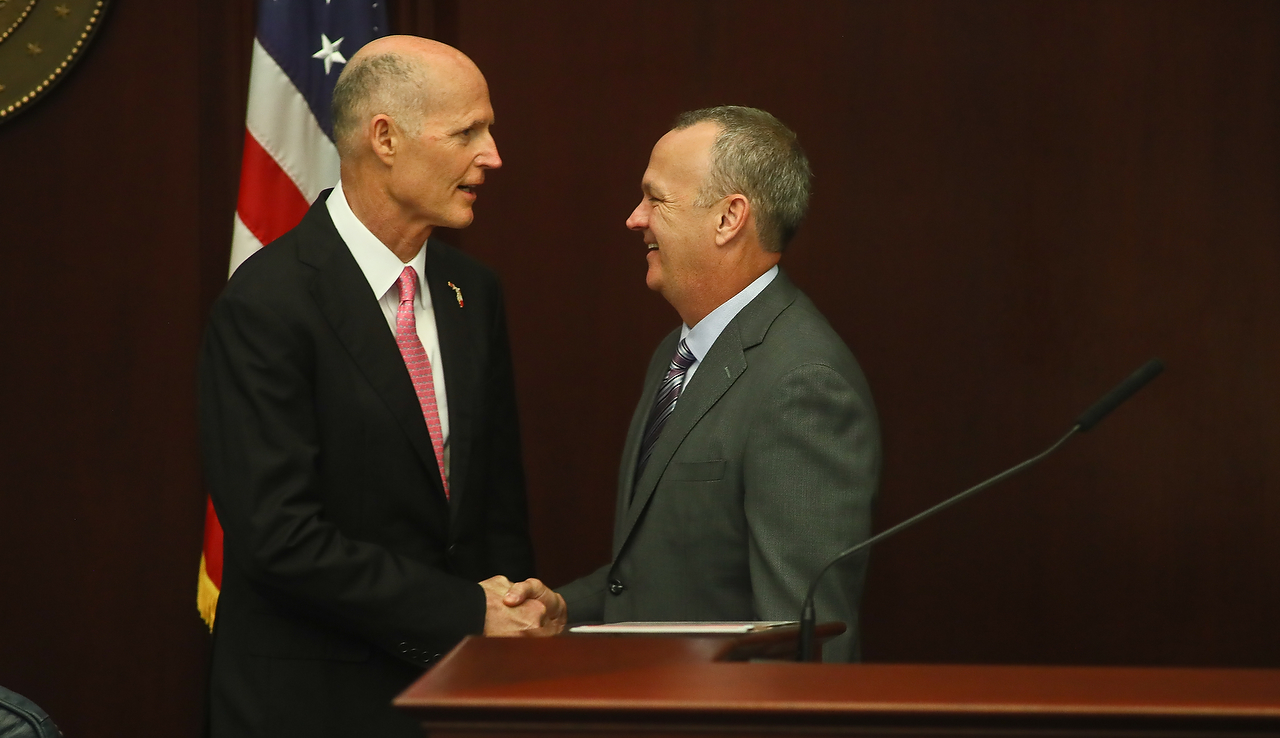
Governor Rick Scott will sign into law a sweeping education bill that would steer more money to privately run charter schools, require recess in elementary schools, and tinker with the state’s oft-criticized standardized testing system.
An informed legislative source told FloridaPolitics.com Monday morning that Scott will sign HB 7069 in Orlando on Thursday.
The legislation, which was a top priority for House Speaker Richard Corcoran, barely edged out of the Florida Senate on a 20-18 vote where some Republicans joined Democrats in opposing the measure. Corcoran said that the changes are even more dramatic than the A+ plan put in by former Gov. Jeb Bush nearly two decades ago that created the state’s first voucher program and created the state’s current school grading system.
“It is the greatest public school bill in the history of Florida,” Corcoran said after the bill was sent to Gov. Scott.
The Senate vote came after intense debate in which opponents contended the legislation was a give-away to charter schools, which are public schools that are run by private organizations and sometimes managed by for-profit companies.
The nearly 300-page bill includes a long list of education changes that legislators had been considering. But the final bill was negotiated largely in private and was not seen by the public until last week.
Included in the bill is a requirement that elementary schools must set aside 20 minutes each day for “free-play recess,” although at the last minute charter schools were exempted from the mandate. The bill includes more than $200 million for teacher and principal bonuses.
Bowing to criticism about Florida’s testing regimen, the measure eliminates the Algebra 2 end-of-course exam and pushes back the date in the school year when students must take Florida’s main standardized test.
Another major part of the bill creates the “Schools of Hope” program that would offer financial incentives to charter school operators who would agree to take students who now attending chronically failing schools, many of them in poor areas and urban neighborhoods. Additionally, up to 25 failing public schools may receive up to $2,000 per student for additional student services.
Material from the Associated Press was used in this post.