Sunburn – The morning read of what’s hot in Florida politics.
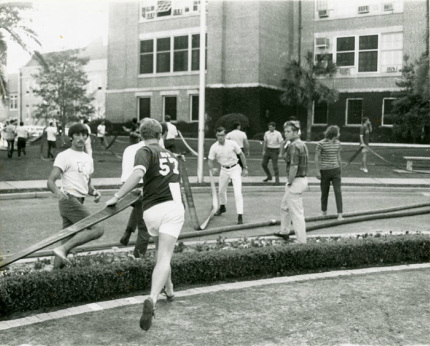
Today’s SachsFact is brought to you by the public affairs, integrated marketing and reputation management experts at Sachs Media Group: Giving a different meaning to late ‘60s student activism, about 1,000 Florida State students sprang to action on April 27, 1969, to help fight a furious fire at Wescott Hall, the university’s iconic administration building. Students formed a human chain to save records in that pre-digital age, even as the blaze raged high above them. Administrative offices were relocated for four years while Wescott was rebuilt, and campus life returned to the era’s “normal” mix: education, sports, parties – and student protests.
DAYS UNTIL Avengers: Age of Ultron debuts: 4: Sine Die: 4 (maybe); Jacksonville’s Mayoral Election: 22; When the Florida Senate Would Like to Extend the 2015 Session: 63 Major League Baseball All-Star game: 77; Star Wars: The Force Awakens debuts: 241; First Day of 2016 Legislative Schedule: 260; Florida’s Presidential Primary: 322; Florida’s 2016 Primary Election: 491; Florida’s 2016 General Election: 562.
CONGRATS to Beth Sweeny on her first-place finish in the 38th Annual Rose City 10K run. Sweeny returned back to the Broad Street Post Office in 41:32. The Sweenys have two trophies to add to the mantle, as her husband Kevin was the first male finisher in the 40 to 49 age group. He finished in 37:29.
THE WEEK AHEAD
Dozens of bills will be debated on both the House and Senate floor this week, but everyone knows there’s really just one bill to rule them all: the General Appropriations Act, the passage of which will require the chambers to act sync up their ledgers to the tune of $4 billion. By now both sides have admitted that the battle will go to overtime, depriving this year’s Sine Die on Friday of its usual sense of finality.
FINAL WEEK OF THE SESSION WILL BE BUSY — AND NOT FINAL via Bill Cotterell of the Tallahassee Democrat
This much is for certain: Florida legislators will end their regular session this week.
What they will do – or more important, what will be left undone – remains to be seen. So is when they’ll be back, to pass a state budget by June 30.
That’s the only thing lawmakers are constitutionally required to do every year. But hard-and-fast disagreements over health care spending have made this year’s House-Senate standoff more intractable than ever.
It’s been a busy 55 days since Gov. Rick Scott’s “state of the state” speech on March 3. But the House and Senate still have crowded calendars of non-budget bills to discuss before the May Day adjournment of the session.
The final days are always hectic, with scores of big and small bills pushed through the system while budget negotiators work toward compromise – under a legal mandate to deliver a deal 72 hours before they can go home. But they’ve long since given up crafting a compromise between the $76.2 billion House budget and the $80 billion Senate plan, and going home on time.
It wasn’t until Thursday that the House made its first budget overtures, and the Senate replied the next day. There was no noticeable progress on either side of the Capitol.
“The Senate is prepared to extend our session to June 30, if we’re unable to make allocations,” Senate Appropriations Chairman Tom Lee told members before they adjourned Friday. “There’s no way to get home on time, we all know that.”
Perhaps symbolizing the reduced pace of the final week, Senate President Andy Gardiner said the Senate will convene at 1 p.m. on Monday. No need to rush back for one of those marathon days that mark most final weeks, he said.
“We’ll finish strong through next Friday,” Gardiner said. “We will get all the policy done that we can.”
LEGISLATURE NOT CLOSE TO STRIKING DEAL via Lloyd Dunkelberger of Halifax Media Services
A $4 billion gap separates the Senate and the House. The impasse is over whether to accept some form of Medicaid expansion under the Affordable Care Act, which the Senate supports and the House and Gov. Scott oppose.
Both sides are deeply entrenched. There will not be a budget deal before Friday’s session deadline. And some question whether lawmakers can come to agreement before the new budget year starts on July 1.
… It has been nearly a quarter-century — 1992 — since a Legislature, then led by Democrats, failed to pass a budget by the July 1 deadline. And while that remains a real but remote possibility this year, the budget gridlock among Republican legislative leaders carries significant policy and political implications.
Scott’s call for $673 million in tax cuts — which seemed like a slam dunk in a year with a $1 billion budget surplus — is in jeopardy. The Senate has refused to back any tax cuts until health care funding is resolved. The House has signaled a willingness to pare back the tax cuts in order to boost health care funding, as long as it doesn’t involve Medicaid expansion.
Scott has said that if the lawmakers fail to deliver on tax cuts this year, he will push for a $1 billion cut next year.
If the budget impasse is pushed into June, lawmakers could face another complication from the U.S. Supreme Court, which is expected to decide the fate of federal health insurance exchanges that now provide coverage to 1.6 million Floridians under the Affordable Care Act.
Senate leaders argue that if those Floridians lose their insurance coverage in a federal court ruling, the state would be able to step in if lawmakers back the Senate’s Florida Health Insurance Exchange plan, which uses Medicaid funding to extend private health insurance to low-income residents.
On top of that, Florida remains the largest swing state in presidential politics, where health insurance is likely to be a key issue between the Republican and Democratic presidential candidates next year.
Sen. Lee … has warned that there could be implications for the GOP if lawmakers cannot successfully resolve the impasse.
“This damages our party,” he said. “This makes us look like we cannot govern. We cannot work out our differences. And the talk about a big tent is cheap.”
KEEP YOUR EYE ON LATE LEGISLATIVE PLOYS via Tia Mitchell of the Florida Times-Union
When a bill is weighed down with amendments that change its scope from a single issue to many under a general topic, we call it a legislative “trains.” Each amendment is a new car lengthening the “train,” potentially strengthening its power or stopping it in its tracks.
“Trains” become so sweeping they force lawmakers to make gut decisions about whether to vote for legislation that contains just as much stuff they like as things they don’t. You don’t often see unanimous votes on “trains,” and sometimes members of the same party take opposite sides.
A Senate bill that initially dealt with career education and job training now renames the state’s community college system, outlines performance funding for universities and alters the Florida High School Athletic Association.
Another Senate “train” started off as a bill focused on streamlining the state’s process for evaluating business incentives. Now it reforms entertainment industry tax credits, allows businesses already in the Enterprise Zone program that expires this year to continue reaping benefits for a while and awards state dollars to four sports facilities, including Jacksonville’s EverBank Field.
The stadium funding provision is so controversial that some senators may even try to remove it from the “train” so that it has a better chance of gaining approval in the House, where conservative Republicans are critical of tax credits that benefit wealthy team owners.
These trains are up for final approval this week. …
CAN HEALTH CARE ISSUES PASS WHEN MEDICAID IS BOGGING DOWN SESSION via Christine Sexton of Florida Politics
Health care financing isn’t the only unresolved issue heading into the last week of the 2015 Legislative Session.
A significant amount of health care policy — from what role advanced registered nurse practitioners should have in an ever-evolving delivery system to whether doctors should be allowed to override insurance companies and HMOs as they struggle to hold down health care costs — is still outstanding.
Jacksonville attorney Christopher Nuland has been lobbying health care issues in the Florida Legislature and at state government agencies for the lat 20 years. Nuland said the expectation is that the Legislature will create a “train” for health care legislation and, for now, the bill that appear to be the vehicle for the train is SB 532, HB 281. The issues that are expected to be included in the train include:
- Developing a site selection process for a new Veteran’s Administration nursing home;
allowing physicians to participate in direct primary care; - Allowing advanced registered nurse practitioners and physician assistants to prescribe and order controlled substances in a hospitals; and
- Clarifying in statute that free clinics can receive an appropriation, or grant from an appropriation, to provide services to the uninsured while preserving their sovereign immunity protection
SECRET MEETINGS, THREATS, LAWSUITS — A FLORIDA MELTDOWN via Scott Maxwell of the Orlando Sentinel
(L)ast week, absurdity went on steroids when Republicans realized that all their screaming about how they don’t want no stinkin’ federal money might end up with them getting their wish.
This was something they never really expected.
Yes, they want to rant about Obamacare. But they also wanted to keep sucking up federal health-care dollars.
So when the feds finally said: Fine, if you don’t want our health dollars, we won’t give you our health dollars, they flipped out.
Gov. Rick Scott vowed to sue. Suddenly, he was no longer ranting about federal health-care money … he was desperate for it.
House Republicans weren’t sure what to do. So they staged a secret meeting where they passed out talking points for members to parrot. This way, if a pesky constituent asked why they were making such a mess, they could respond with prattle like: “We will continue to listen to new ideas …
Senate Republicans — the grown-ups in the room — tried to offer solutions. But the two sides (from the same party) can’t even agree on a budget. So now they’re talking about a special session so that taxpayers can fund another round of this unproductive insanity.
Welcome to government in the sunshine — where leaders keep secrets from the people they represent and where working-class families are the victims of political warfare.
HOW THE LEGISLATURE GOT HERE — “Republican family feud grinds legislation session to a halt” via Steve Bousquet and Mary Ellen Klas of the Times/Herald Tallahassee Bureay
MORE ON HOW THE LEGISLATURE GOT HERE — “Documents: Many players contribute to standoff on Medicaid Expansion” via Matt Dixon and James Rosica of the Scripps/Tribune Capital Bureau
TWEET, TWEET: @WillWeatherford: Wow – I thought the Medicaid Expansion debate was ” robust” when I was Speaker. Little did I know. Hang in there, Steve Crisafulli
>>>RECENTLY PASSED BILLS ON THEIR WAY TO THE GOVERNOR
… TO AID CRAFT BREWERS
Florida’s “growler war” over craft beer may be ending under legislation passed by the state House and ready to go to Gov. Scott.
Senate Bill 186, already passed in the Senate, lifts the problematic requirement that craft breweries operate as tourist attractions, a holdover from the days when the law was intended to benefit Tampa’s Busch Gardens.
It also allows the breweries to sell beer in the popular 64-ounce, refillable “growler.” Current law allows 32- and 128-ounce growlers, but not the size in the middle, which brewers and craft beer fans say is the best size to buy the increasingly popular brews.
The legislation could end a long war between craft brewers and big beverage distributors over regulation of beer sales, in which the growler became a pawn.
Distributors said lifting the limits on craft brewery operations could open the way for large beer manufacturers to dominate the market by opening many small tasting rooms selling only their own beer. (via the Associated Press)
… ELIMINATING STATE DEVELOPMENT REVIEW PROGRAM
A bill that would eliminate a state review program for shopping malls, huge housing projects and other large developments passed the House and is on the way to the governor.
Supporters of SB 1216 said the “developments of regional impact” program was burdensome, redundant and actually discouraged the development of planned communities.
The Legislature created the DRI program in 1972 to provide for review by state and regional agencies of the effects of development on roads, schools and the environment. But the Legislature in 2010 exempted eight counties and more than 200 cities from the requirement in state law.
A 2011 Senate study stated that the argument can be made for getting rid of the program but it remains useful especially in rural areas where counties often don’t have the planning staff to deal with large developments. State Rep. Mike La Rosa, a Republican from St. Cloud, said there still would be state review of large developments.
“Ultimately this bill removes underutilized processes,” La Rosa said.
Existing developments of regional impact would go through the state coordinated review process, which is administered by the Florida Department of Economic Opportunity. Groups opposing the bill included the Florida Association of Counties, the Florida League of Cities and 1000 Friends of Florida. (via Bruce Ritchie of Florida Politics)
… EXEMPTION FOT TAXPAYER EMAIL ADDRESSES FROM SUNSHINE LAWS
The House unanimously approved SB 200, a bill creating a public-records exemption for taxpayer email addresses collected by county tax collectors.
Approving the bill 117-0, the House pass a measure that supporters say will help prevent identity theft. Last month, the Senate also passed the measure unanimously. The bill’s next stop is Gov. Scott’s desk.
A public-records exemption prevents any release of taxpayer email addresses acquired by county tax collectors in the course of sending tax notices. Opposing the bill was Tallahassee-based First Amendment Foundation, an open record and open government advocate.
FLOOD INSURANCE REFORM
A pair of Pinellas County Republicans passed legislation this week that would create a new insurance product designed to keep down rising flood insurance rates, a crucial issue in the Tampa Bay Area they represent.
SB 1094 by Sen. Jeff Brandes of St. Petersburg was approved on the House floor today by a vote of 89-26. HB 895 by Rep. Larry Ahern of Seminole was replaced by the Brandes bill so Friday’s passage means that the legislation is completely through the legislative process.
“This bill gives Floridians an affordable option that may keep them in their homes, and empowers homeowners to take control of their flood insurance,” Brandes said in a joint statement. “Washington has held our homeowners hostage with drastic rate increases, but this legislation shows that Florida is committed to private market flood insurance reform.” (via Ryan Ray of Florida Politics)
>>>BILLS PASSED IN THE HOUSE HEADED TO THE SENATE
… CHANGES IN THE STATE’S PRISONS
Florida may start a pilot program that brings body cameras into one state prison under a bill passed by the Florida House.
The House passed a comprehensive prisons bill and sent it over to the Senate. The legislation comes in the wake of prison scandals that include suspicious inmate deaths and poor conditions.
The Senate previously passed its own bill that called for creating an independent commission that could investigate future allegations of corruption or problems. But House leaders refused to go along with the proposal.
Rep. Carlos Trujillo said legislative leaders will instead create a joint legislative panel to provide additional oversight of prisons. But that idea is not included in the bill (SB 7020) passed by the Florida House. (via the Associated Press)
… PROPERTY RIGHTS BILL RESPONDING TO U.S. SUPREME COURT CASE
A property rights bill filed in response to a U.S. Supreme Court case ruling in favor of an Orange County landowner passed the House.
The Supreme Court in 2013 overturned a Florida Supreme Court ruling against the late Coy A. Koontz Sr., who sought to build on 3.7 of his 15 acres in Orange County.
HB 383 creates a cause of action to recover monetary damages for landowners where state and local governments impose conditions that rise to the level of “unconstitutional exactions.”
The bill had pitted property rights supporters against local governments with the Florida Association of Counties and Florida League of Cities opposing the bill in early committee stops. State Rep. Katie Edwards sponsored the bill. (via Bruce Ritchie of Florida Politics)
… STUDENTS MAY BE ABLE TO CROSS COUNTY LINES FOR SCHOOL
Florida children may be able to cross county lines to go to school under a bill passed by the Florida House.
The House on Friday voted 80-36 for a bill that would let children enroll in any school in the state regardless of where they live. The provision is included in a comprehensive education bill that now heads to the Florida Senate.
If the bill (HB 1145) becomes law, families could enroll in any public school if it has space. Families would be responsible for taking their children to and from the school.
House Democrats criticized the bill, saying the open enrollment provision would create a system of “haves and have nots.” Republicans defended the measure because it would help those students who need the most help. (via the Associated Press)
>>>LEGISLATION IN JEOPARDY…
AMENDMENT 1 FUNDING
When environmental leaders across the state decided to push for a constitutional amendment generating billions to buy conservation lands, one of their key goals was to replenish the Florida Forever fund.
Under Florida Forever and its forerunner, Preservation 2000, the state purchased 2.5 million acres of environmentally sensitive land, including rare-species habitat, floodplains and fragile coastline, protecting them in perpetuity from development.
But Florida Forever, approved in 1999 and envisioned to raise $300 million a year for land acquisition, hasn’t been fully funded since the 2008 legislative session. In 2009, after the recession hit and doc-stamp revenue from real-estate sales plummeted, lawmakers put no money into the fund. Since 2008, the program saw a 97-percent drop in funding.
Florida’s Water & Land Legacy, made up of more than a dozen groups, formed in part because of flagging Florida Forever support. The coalition gathered enough petitions to put Amendment 1 on ballots last year, and voters approved it overwhelmingly, with 75 percent of the vote.
The House has proposed only $8 million for Florida Forever, the Senate $15 million, though land purchases are included elsewhere in the budget. Scott has proposed $100 million; Amendment 1 sponsors want $155 million. (via Jeff Burlew of the Tallahassee Democrat)
FILM TAX INCENTIVES
Proponents of Florida’s film industry are back in Tallahassee for the third year in a row, trying to get funding for a new tax incentive program. After failing to find the necessary support in the Legislature the past two years, industry officials remain optimistic that they’ll get a new program before this year’s session ends Friday.
The current program, which was supposed to run from 2010 to 2016, has already used up the $296 million in tax credits it was allocated and has been suspended.
“It has basically taken us out of the game,” said Gus Corbella, a lobbyist and chairman of the Florida Film and Entertainment Advisory Council. “For two years, the state of Florida has not had any credits to be able to dole out.”
Florida is primarily losing film productions to Georgia, Louisiana and New York, Corbella said.
“That’s all work that’s seeping out of Florida and going to other states,” Corbella said. “And that’s a real economic tragedy.”
Bills for a new program have been moving through the House and Senate. No dollar amounts have been included yet, but a new proposal would move away from the first-come, first-served nature of the old program and establish six-month application periods. The state’s film office would then rank proposed projects in a given period and dole out credits based on factors such as number of state residents hired, in-state expenditures, duration of filming, capital investments and local financial support. (via the Associated Press)
LEGISLATIVE SCHEDULE HIGHLIGHTS
CLAIM BILLS ON SENATE FLOOR
During its floor session, the Senate takes up a dozen “claim” bills, or lawsuits filed against government agencies from injuries or deaths. Sovereign-immunity laws limit most damages state and local agencies can pay to $200,000 in such cases. The Legislature must approve any larger payments. The bills arose from municipalities across the state: Miami-Dade, Broward, Palm Beach and Pasco Counties, as well as Jacksonville, Tallahassee, Hialeah, Hollywood and North Miami. Session begins 1 p.m. in the Senate chamber.
HOUSE CONSIDERS POWDERED ALCOHOL, DRONES
A House floor session addresses a wide range of issues: bills SB 998 and HB 1247 to ban powdered alcoholic beverages. Also on the schedule is SB 766 and HB 649, which regulate surveillance by unmanned drones. Session begins 2:30 p.m. in the House chamber.
***Today’s SUNBURN is brought to you by Bright House Networks, a trusted provider of industry-leading communications and networking services to businesses of all sizes, from startups to large, multi-site organizations. Our Enterprise Solutions provides the fiber connectivity, cloud and managed services today’s large organizations demand, while our Business Solutions team works with small- to mid-size companies to ensure they get the right services to fit their needs and their budget. Find out why so many businesses in your area trust their communications needs to Bright House Networks. Learn more at brighthouse.com/business.***
EDITORIAL: HOUSE SHOULD APPROVE UTILITY REFORMS via the Tampa Bay Times
With five days left in the Florida Legislature’s depressing regular session, lawmakers still have an opportunity to provide significant rate cuts and modest protections for customers who have been exploited by the electric utilities. The House should pass legislation that would reduce costs for Duke Energy ratepayers related to a broken nuclear plant and prevent some other abuses that have occurred in recent years. This isn’t the sweeping reform of utility regulation that Florida needs, but it is a good step in the right direction.
Passed unanimously by the Senate, the bill sponsored by Sen. Jack Latvala includes a complicated plan endorsed by Duke Energy that would change how costs are paid for cleaning up the closed Crystal River nuclear plant. Instead of ratepayers paying Duke roughly 7 percent in financing charges over 20 years, the legislation would enable the utility to sell that debt to investors who would get a lower return on their money. Lowering the financing charges would save Duke customers $600 million, or about $2 to $3 a month. Despite lawmakers’ affection for the electric utilities, this provision alone should be enough for House Republicans who love tax breaks to send this bill to Gov. Scott.
There are other positive provisions for consumers as well. For example, the bill would ban utilities from charging customers higher rates because their billing period was extended. That addresses the public outrage over Duke sending customers larger bills last year when they were pushed into higher rate classes only because the utility extended their billing cycles as it overhauled its meter reading system. Duke eventually apologized and gave customers credits on their bills. This legislation (HB 7109) also would set new limits on total electric deposits and require utilities to help customers get the most favorable rates.
There would be some progressive changes at the Florida Public Service Commission. For the first time, PSC members would be limited to serving 12 years and required to undergo ethics training. The bill is returning to the House for another vote because Latvala wisely insisted that the PSC hold public hearings every other year in the areas served by Duke Energy, Florida Power & Light, Tampa Electric Co. and Gulf Power. That is entirely appropriate, and House members will have to choose between their constituents and utility lobbyists fighting that modest requirement.
MEDICAL POT RULE CHALLENGERHAS NO STANDING, STATE SAYS via Dara Kam of the News Service of Florida via the Tampa Tribune
Attorneys for state health regulators have a week to persuade a judge to toss out a challenge to a proposed medical-marijuana rule in a case that could hinge on whether a nursery was “pregnant” when its owner filed the complaint.
After hearing two days of testimony, Administrative Law Judge W. David Watkins on Friday put on hold the Florida Department of Health’s repeated requests to dismiss the challenge filed by Baywood Nurseries, whose attorney argued that a proposed rule setting up the framework for the state’s noneuphoric medical marijuana industry is unfairly tilted toward large growers.
Instead, Watkins, who threw out the agency’s first stab at a rule last year, gave both sides until Friday to make their cases as to whether the nursery, which specializes in gardenias, has legal standing in the case.
… At the time Baywood Nurseries filed the challenge on March 24, Baywood’s certification shows that the Apopka nursery was growing fewer than 400,000 plants, owner Raymond Hogshead testified Thursday.
That means Baywood wasn’t eligible to file the complaint, Ed Lombard, a private lawyer hired to represent the department, told Watkins on Friday afternoon.
ASSIGNMENT EDITORS: Uber South Florida General Manager Kasra Moshkani, driver-partners and supporters will hold a rally to deliver petitions ahead of a vote that could force Uber out of Broward County. Event begins 10:15 a.m. at the SE Corner of Andrews Blvd and SE 2nd Street, Fort Lauderdale, across from the Broward County Government center.
BIG SUNDAY READS
HIGHER-ED HUSTLE: A MIAMI HERALD INVESTIGATION INTO FLORIDA’S FOR-PROFIT COLLEGE INDUSTRY
It’s an industry that seemingly can do no wrong in the eyes of regulators. That’s because for-profit colleges in Florida are mostly self-regulated. A look at how these colleges came to flourish in Florida.
— POLITICIANS TURN FLORIDA INTO FOR-PROFIT COLLEGE PARADISE
While other states have reined in unscrupulous for-profit colleges caught defrauding students, Florida has dismissed complaints and fueled the industry’s growth. In their zeal to fill classrooms, some schools do whatever it takes. That can mean deploying strippers as recruiters … lying about job placement rates and using high-pressure, boiler-room sales tactics, including a psychological technique called the “pain funnel,” that can reduce a recruit to tears.
— INDUSTRY TOUTS SUCCESS STORIES
One student is glad she went to for-profit colleges, regardless of the debt load she carries. Kyle Hitt, another grad, isn’t so sure. For what he paid, Hitt said, he could have earned a full-fledged degree somewhere else, instead of a certificate.
— EX-EMPLOYEES DISCUSS PREDATORY PLAYBOOK
According to former recruiters, questionable practices ranged from crafting fake high school diplomas for unqualified students to fraudulently logging on for dropouts. Vince Martin is a former admissions recruiter for Everest University, and he has a message for all those students he signed up: “I’m really sorry.”
— HEARTFELT COMPLAINTS AND FORM-LETTER RESPONSES
The agency charged with keeping for-profit colleges honest is dominated by executives from those very colleges. Students who complain likely have no idea. Sara Pierce … enrolled at Kaplan University online with the goal of becoming a nutritionist. She shared her dream with the Kaplan recruiter, and with her professors and her academic advisors … but she says the school waited until a week before graduation to disclose that its nutrition program wasn’t accredited.
Dissatisfied students at private, for-profit colleges can take their grievances to the Commission for Independent Education, an arm of the Florida Department of Education. The Herald examined 18 months of complaints from South Florida. The complaints contained various allegations against schools, including accusations of fraud, theft, mistreatment and poor instruction.
— POLITICIANS CASH IN ON COLLEGES
For-profit colleges contribute large amounts to Florida politicians and sometimes hire them. Legislators, in turn, reshape laws to help the schools. The Herald found that, despite fraud lawsuits and government investigations around the country, Florida’s Legislature continues to encourage the growth of the industry … Lawmakers have increased funding sources and reduced quality standards and oversight. Florida’s attorney general, meanwhile, has been less aggressive than some counterparts in pursuing schools when they skirt laws involving the hundreds of millions they receive in state and federal money.
— MONEY, POLITICS AND FLORIDA’S CAREER COLLEGES
Seeking to have its voice heard in Tallahassee and Washington, D.C., the career college industry has donated more than $1.5 million to Florida politicians and state parties since 2008. Most of the schools are for-profit institutions. Some of the largest donors include Keiser University, Dade Medical College and Full Sail University. Contribution totals for a school include money donated by individual school employees, affiliated entities and other companies operated by school executives or founders.
— KEISER: NOT-FOR-PROFIT BUT STILL LUCRATIVE
With for-profit colleges facing investigations and lawsuits, Keiser transformed itself into a nonprofit. It still generates a lot of money for the co-founder/chancellor. With the for-profit college industry beset by lawsuits and prosecutions, being nonprofit allows Keiser to distance itself … “it’s operating in the same way, with the same people, the only difference is that it’s owned by a nonprofit.”
— RAISING CONCERNS ABOUT QUALITY
In the healthcare establishment, some fret over a drop in the passage rate for nursing grads and a rise in unaccredited physical therapy assistant programs. The explosion of mostly for-profit nursing schools has coincided with a drop in Florida’s passage rate on the license exam. Once in the middle of the pack among states, Florida’s overall RN passage rate dropped from 88.4 percent in 2009 to just under 72.6 percent in 2014, second to last among the 50 states.
FLORIDA’S DEATH ROW COULD SEE VACANCIES IF SUPREME COURT RULES JURIES MUST BE UNANIMOUS via Larry Hannan of the Florida Times-Union
Very few people in Jacksonville have heard of Timothy Hurst. But the Panhandle man may soon be responsible for getting dozens of people from the Jacksonville area off Death Row. The scenario could happen because of the way Florida sentences convicted killers to death. Hurst, 36 and on Death Row for killing an Escambia County fast-food manager, claims his death sentence violates the Sixth Amendment because only seven of his 12 jurors recommended he get the death penalty. The other five said he should get life without the possibility of parole.
Florida, Delaware and Alabama are the only states that don’t require juries in death-penalty cases to reach a unanimous decision when sentencing someone to death. In Florida a jury must unanimously vote to convict someone of first-degree murder and then decides whether to recommend death after a separate sentencing hearing.
Seventy-five people are on Death Row for murders committed in Duval, Clay, Nassau, Putnam or St. Johns counties. Only 13 got sentenced to death after a jury unanimously recommended it.
That means 62 people on Death Row from Northeast Florida could have their death sentences thrown out if the Supreme Court rules in Hurst’s favor. People who could be impacted include Rasheem Dubose, convicted of the murder of 8-year-old Dreshawna Davis; Paul Durousseau for the murder of Tyresa Mack; and Alan Wade, Tiffany Cole and Michael James Jackson for the robbery, kidnapping and murders of Carol and Reggie Sumner.
Richard Dieter, executive director of the Death Penalty Information Network, said death-penalty opponents have been waiting a long time for a case like Hurst’s. In fact they’ve been waiting since 2002.
That was the year the U.S. Supreme Court ruled in Ring vs. Arizona that a jury — not a judge — must make the factual findings required to sentence someone to death.
The 7-2 majority opinion, written by Justice Ruth Bader Ginsburg, said juries must find beyond a reasonable doubt each factor considered in determining whether a death sentence should be imposed. To involve jurors any less, she said, violated defendants’ Sixth-Amendment right to a trial by jury.
INDIAN RIVER LAGOON REACHES A TIPPING POINT via Jim Waymer of Florida Today
The Indian River Lagoon is deathly ill. Seagrass — the base of the food web — has yet to recover from severe algae blooms in 2011. And scientists are still puzzled by what killed more than 70 dolphins and hundreds of lagoon manatees and pelicans.
But the patient can be cured.
Ecologists say healing our lagoon will take multiple long-term remedies and all hands on deck. Dredges must first stop the bleeding, scientists say, removing noxious muck built up over half a century. A key battle this spring in Tallahassee will determine how much of the new state conservation money that voters approved in November will help buffer the lagoon.
Meanwhile, we need new ways to temper runoff, septic tank seepage and what we put on our lawns — all recipes for more muck.
The cure will take ample doses of money and time. Officials estimate local governments from Volusia County to Fort Pierce will spend $1.4 billion over 15 years to meet new state limits on the nitrogen and phosphorus that enters the lagoon from soil erosion, fertilizers, septic tanks and other sources.
But the lagoon’s road to recovery also will be paved by an army of healers, people like Kathy Quiett and thousands of other volunteers helping nurse the lagoon back to life.
“It’s like a domino effect. When something starts to break down, it just tumbles,” Quiett said at a recent volunteer oyster reef restoration near Melbourne Beach. “But it can be fixed.”
Shellfish can’t do it alone. Experts say the lagoon’s recovery will require comprehensive, long-term, costly commitments on a regional scale, with the sustained political will to make them happen.
***Liberty Partners of Tallahassee, LLC, is a full-service consulting firm located just steps from the Capitol. The firm specializes in the development and implementation of successful advocacy strategies highly personalized for each client. Team Liberty is comprised of professionals with a track record of successful coalition-building, grassroots efforts and team coordination. The combination of a strong commitment to clients and practical government and private sector experience is why Fortune 500 companies and not-for-profits alike choose Liberty Partners of Tallahassee.***
BACK ON THE CAMPAIGN TRAIL
IS ANYONE AFRAID OF JEB BUSH? via Dan Balz of the Washington Post
Jeb Bush jolted his prospective rivals for the Republican presidential nomination last winter when he dived with unexpected aggressiveness into the 2016 campaign. Few of them seem to be quaking now.
The former Florida governor is still the biggest name in the GOP field, with a fundraising network unmatched by any of the others. But Bush’s considerable assets so far have done little to reshape the early polls or keep others out of the race. If anything, it’s the opposite.
Bush acknowledged all this when he was in New Hampshire a week ago. Noting his strong establishment support, one voter, concerned about whether he was a true conservative, said she and others don’t want to see a coronation for the GOP nomination in the way Democrats seem to be moving to anoint Hillary Rodham Clinton as their nominee.
An incredulous Bush responded with laughter. “I don’t see any coronation coming my way, trust me,” he said. “Come on. What do you see that I’m not seeing? We’ve got 95 people possibly running for president. I’m really intimidating a whole bunch of folks, aren’t I?”
Perhaps by next winter, Bush will have become that intimidating figure, but over the past month, things have happened that seemed far less likely when he released a short video announcing that he was seriously considering running.
HOW BUSH SCHOOLED THE FLORIDA PRESS via S.V. Dáte of POLITICO
This was the John Ellis Bush I had known and covered for 10 long years: a man who viewed politics as combat but who, in the end, respected those who could give as good as they got. Bush liked those reporters who came to him prepared; too many didn’t, and he ate up people like that.
Of course, it wasn’t all late-night nastygrams and unceremonious no’s. On less tense occasions, we had in-the-weeds discussions about tax and budget policy, as well as a tutorial about the VeggieTales characters. As Florida governor, he was accessible enough to exchange emails directly with the general public, other reporters—even me.
The word “relentless” doesn’t begin to explain this Bush. I’ve yet to encounter any other politician as smart, as driven, as self-disciplined, as organized, as single-minded about his goals—or as certain about his views.
And when it came to dealing with the press corps, Bush wasn’t afraid to let that certainty shine through. He’s almost always the smartest guy in the room — and he made sure to remind us of that in news conference after news conference, eviscerating reporters who came unprepared or with wishy-washy questions. In politics, Bush has always seen the world starkly—you’re either with him or you’re against him. And the press, he was convinced, was usually against him.
If, though, he wins the White House, where he can impose strict message discipline and dole out scoops to chosen reporters while protected and isolated inside a Secret Service bubble—well, that might finally provide the scrutiny-free work environment that he’s always seemed to crave.
BUSH SAYS SPENDING $1 BILLION ON CAMPAIGN IS UNNECESSARY via Michael Barbaro of the New York Times
Bush said he thought it was unnecessary to spend $1 billion on a presidential campaign, a figure reached by both Mitt Romney and President Obama in 2012, saying a smart team could run a leaner operation.
It was an implicit critique of the emerging campaign of Hillary Rodham Clinton, whose supporters estimate she will raise and spend that amount in her bid for the White House.
“I don’t think you need to spend a billion dollars to be elected president of the United States in 2016,” Bush said in a brief question-and-answer session here.
“I don’t think it’s necessary if you run the right kind of campaign,” he added. “You don’t need to have these massive amounts of money spent.”
Bush made the remark as he prepared to head to a retreat for his biggest fund-raisers at a hotel in Miami Beach.
Such a comment, no doubt welcomed by advocates for campaign finance reform, could eventually pen Mr. Bush in, should his campaign exceed the $1 billion mark.
SPOTTED at Bush’s donor retreat in Miami Beach: Adam Putnam, Will Weatherford
JEB READS
“Bush power-lunches at the 21 Club” via Stephanie Smith of the New York Post
“For Jeb Bush donors, yoga mats and Tesla brochures” via Michael Barbaro of the New York Times
“Turns out Clinton scandal author isn’t publishing a Jeb Bush book” via Susie Madrak of Crooks and Liars
MARCO RUBIO IS A STRONG CANDIDATE — DESPITE HIS POLLING SURGE via Harry Enten of FiveThirtyEight.com
Marco Rubio is surging!
For the first time since the 2014 midterm elections, Rubio is leading the 2016 GOP field, according to polls by Fox News and Quinnipiac University. Rubio is a serious contender for the Republican nomination, but he is only the latest candidate to receive a polling boost from a burst of favorable press. And he likely won’t be the last.
In a race so tight, the most important thing to pay attention to continues to be the underlying fundamentals of the race: Is the candidate liked? Is she building a campaign infrastructure? Does she hold positions amenable to voters? And so on. Those look good for Rubio.
Bush climbed during December, which is when he announced that he was actively exploring a run for president. Scott Walker saw a more rapid rise during January, when he gave a very well received speech at the Iowa Freedom Summit. Ted Cruz, who isn’t likely to actually contend for the nomination, rocketed up when he announced for president in March. Even Rand Paul, who was fairly well-known before his campaign launch in April, rose in the past month.
The fact that all these candidates have surged and then dropped (or begun to drop) again and that no one is consistently polling above 15 percent shows how unsettled the GOP field is — not surprising such a long way from the actual voting.
What makes Rubio strong isn’t his polling surge, but that he is well-liked across the party apparatus. He pulls in conservatives with his voting record and moderates with his impressive 2010 Senate victory in Florida, a crucial battleground state.
When voters actually start tuning into the race, Rubio will be in a good position to win over Republicans who are currently undecided or tentatively supporting another candidate. (That’s not to say he’ll actually win them over; he’ll just be in a good position to.)
RUBIO’S FINANCES AN OPPORTUNITY — AND A CURSE via Alex Leary of the Tampa Bay Times
Rubio nearly quit politics.
He was so broke in 2001 that just as he began his ascent in the Florida House, he and his wife had to move in with her mother. Rubio decided to leave Tallahassee and practice law full time.
He got in his car to think and wound up at Church of the Little Flower in Coral Gables, where he had gotten married three years earlier. He knelt to pray. “Why had God allowed me to come so far only to let me fail?” he recounted in a 2012 memoir.
As a Republican presidential candidate, 43-year-old Rubio is portraying himself as someone who shares the struggles and aspirations of many Americans. It’s not just a line when he talks about crushing college loans; he has lived it. He has felt the squeeze of a mortgage and providing for four children.
Yet Rubio’s story also raises old criticisms that he has lacked personal fiscal discipline, got special financial favors and abused campaign funds. It reveals a career politician’s income growing in step with his rising clout in Tallahassee, including a $300,000 a year job at a law firm that arrived as he locked in the position as House speaker.
Rubio today is not a millionaire like many of his colleagues in the Senate or some rivals on the campaign trail, and his profile is vastly different than the last Republican nominee, Mitt Romney. But that divine luck 14 years ago — “Was it a miracle?” Rubio wrote — has put him on a comfortable path.
RUBIO SAYS GOVERNORS AREN’T READY FOR PRESIDENCY ON DAY ONE via John McCormick of Bloomberg Politics
Governors running for president — including, potentially, Wisconsin Governor Scott Walker and Bush — are inherently inferior because they lack the foreign policy experience held by members of Congress, Rubio said in Iowa.
“Governors can certainly read about foreign policy in briefings, and meet with experts, but there is no way they’ll be ready on day one to manage U.S. foreign policy because the learning curve alone would take a number of years, and you see that reflected in the history of the presidency,” the Republican presidential candidate told reporters and editors for the Des Moines Register.
What about Ronald Reagan, a former governor and Republican icon?
“Ronald Reagan was someone, first of all, that had spent a number of years talking about foreign policy, more than a dozen years after he left the governorship of the state of California, he dedicated to foreign policy,” Rubio said. “He also faced a pretty straightforward threat, and that was the expansion of Soviet-style Communism at the expense of U.S. influence.” Rubio also added that Reagan “faced some other threats like the Iranian hostage crisis.”
Rubio did not always seem to follow his assessment that governors are not ready for the presidency. In 2008, before he was a senator, Rubio campaigned for, and endorsed, former Arkansas Governor Mike Huckabee over Senator John McCain of Arizona.
***Smith, Bryan & Myers is an all-inclusive governmental relations firm located in Tallahassee. For more than three decades, SBM has been working with our clients to deliver their priorities through strategic and effective government relations consulting that has led us to become one of Tallahassee’s premier governmental relations firms today.***
HAPPENING TUESDAY — Ag Commissioner Adam Putnam is special guest at a Maverick PAC USA fundraiser reception Tuesday. Event begins 5:30 p.m. at the offices of Florida Realtors, 200 South Monroe St. in Tallahassee. Hosts include Florida co-chairs Slayter Bayless and Jeb Bush Jr., as well as Tallahassee co-chairs Amanda Bevis, Brandi Brown, Chelsi Henry, Darrick McGhee, Toby Philpot and Jason Rodriguez.
NEW LOBBYING REGISTRATIONS
Taylor Patrick Biehl, Capitol Alliance: Foundation Consultants Corporation
Jessica Baker, Ballard Partners: Walmart
Nicole Fried, Tom Gallagher, Trevor Mask, Katie Webb, Colodny Fass: Florida Association of School Administrators
Allison Hunt: Hunt-Watters LLC: Chief Executive Officers of Management Companies
Nancy Linnan, Carlton Fields: The Howard Group
Andrea Reilly, Smith Bryan & Myers: Collier Resources Company, LLP
Matthew Ubben, Confianza Consulting: Noven Pharmaceuticals, Inc
Screven Watson: Collier Resources Company, LLP
PERSONNEL NOTE — Sunburn fave Brad Swanson, formerly of the Florida Chamber of Commerce, is now the State Freight, Logistics and Passenger Operations Administrator at Florida Department of Transportation.
STAFFING MERRY-GO-ROUND
On: Jennifer Lubi is the new District Secretary for Rep. Paul Renner.
On: John Kotyk is the new Legislative Assistant to recently elected Rep. Cyndi Stevenson. Her new District Secretary is Benjamin Brown.
MIAMI HERALD DISMISSES OUTDOORS WRITER via Ted Lund of Florida Today
Long-time Miami Herald outdoors writer Susan Cocking was given her walking papers by relatively new Herald owner McClatchy. Her release means Terry Tomalin, long-time outdoors writer for the Tampa Bay Times, is the last full-time writer dedicated to covering the outdoors in Florida.
The Sun-Sentinel in Fort Lauderdale has an outdoor writer — Steve Waters — but his responsibilities have expanded in recent years as managers justified his position.
“Outdoors today is a lot more than just hunting and fishing,” says Cocking, who was relieved just two weeks shy of her 21st year with the paper. She replaced iconic outdoor editor Jim Hardie, who covered the outdoors beat for the Herald for 27 years. “I’ve covered scuba diving, stand-up paddle boarding, even birdwatching. Everything I’ve ever done, I tried to make it inclusive so that readers could say, ‘Well, gee, if she does it, I can do it.’ ”
For nearly 50 years, the Herald was run by the Knight brothers, John S. and James L. They were newspaper tycoons cut from the same cloth as Citizen Kane. John started at his father’s newspaper, The Akron Beacon Journal, as a sportswriter in 1920. He moved up to managing editor before inheriting the paper in 1933.
John and his brother were avid outdoorsmen and anglers. Both were long-time members of the world’s oldest fishing club, the Miami Beach Rod and Reel Club.
For all intents and purposes, the Herald invented the position of outdoors writer. Over the years, some of the biggest names in outdoor writing have graced its sports page in one way or another: Alan Corson, Philip Wylie, Joe Brooks, Vic Dunaway, Lefty Kreh and Jim Hardie.
CONTEXT FLORIDA: POT AND 2016, EXISTING PROJECTS, FINANCIAL LITERACY AND ONLINE VOTER REGISTRATION
On Context Florida: A medical marijuana amendment could sway the 2016 presidential election, says former Lt. Gov. Jeff Kottkamp. If the Florida Legislature fails to pass a medical marijuana bill this session the issue is almost certain to resurface as a proposed constitutional amendment. The emails are puzzling. The subject lines, in lower case letters, are nondescript, such as “funding” or “need this finished.” Sally Swartz says the sender – the Economic Council of Martin County — does not want to explain them. The Council is promoting a “support existing projects” agenda, which does not include the state buying land south of Lake Okeechobee. Florida’s schools are supposed to prepare our students for success in life. We expect that students are ready for the real world based on what they learn in the classroom. State Sen. Jeremy Ring believes there is one area Florida is perpetually failing the next generation: financial literacy and managing money wisely. Jerry Holland, supervisor of elections in Duval County and president of The Florida State Association of Supervisors of Elections, says that online voter registration is faster, cheaper and more secure. We want a secure system.
Visit Context Florida to dig in.
HOUSE OF CARDS, JACKSONVILLE EDITION via “Ben America.” Watch this YouTube video just for the credits.
SPOTTED on the O’Reiley Factor Friday night: Political consultant Adam Goodman.
FUN READ — THE HIDDEN POLITICS OF VIDEO GAMES via Michael Peck of POLITICO
Games and gamers inevitably reflect the values of their times. If today’s video games are laden with violence and frenetic with high-tech weapons, that is the nature of the society that created them.
[C]onsider the popular computer game Sim City, which first debuted in 1989. In Sim City, you design your metropolis from scratch, deciding everything from where to build roads and police stations to which neighborhoods should be zoned residential or commercial. More than a founder or a mayor, you are practically a municipal god who can shape an urban area with an ease that real mayors can only envy.
But real mayors will have the last laugh as you discover that running a city is a lot harder than building one. As the game progresses and your small town bulges into a megalopolis, crime will soar, traffic jams will clog and digital citizens will demand more services from their leaders. Those services don’t come free. One of the key decisions in the game is setting the municipal tax rate. There are different rates for residential, commercial and industrial payers, as well as for the poor, middle-class and wealthy.
Sim City lets you indulge your wildest fiscal fantasies. Banish the IRS and set taxes to zero in Teapartyville, or hike them to 99 percent on the filthy rich in the People’s Republic of Sims. Either way, you will discover that the game’s economic model is based on the famous Laffer Curve, the theoretical darling of conservative politicians and supply-side economists. The Laffer Curve postulates that raising taxes will increase revenue until the tax rate reaches a certain point, above which revenue decrease as people lose incentive to work.
Finding that magic tax point is like catnip for hard-core Sim City players. One Web site has calculated that according to the economic model in Sim City, the optimum tax rate to win the game should be 12 percent for the poor, 11 percent for the middle class and 10 percent for the rich.In other words, playing Sim City well requires not only embracing supply-side economics, but taxing the poor more than the rich. One can almost see a mob of progressive gamers marching on City Hall to stick Mayor McSim’s head on a pike.
However, the best example of politics and games is the legendary Civilization, an empire-builder and bestseller since it debuted in 1991. Civ is also addictive because it is the ultimate political sandbox. Players can mix and match ideologies and economic systems to create a nation just the way they like it. You can have an eco-green police state, a pacifist monarchy, a fascist state with freedom of speech or a free-market theocracy. Call it curiosity, megalomania or a touch of control freak, but humans are fascinated by the chance to shape the fabric of an entire society.
TWEET, TWEET: Have you seen all the freakin’ updates on (Florida Bar Tab)? This partnership with @SaintPetersblog is working out nicely.