Sunburn – The morning read of what’s hot in Florida politics.
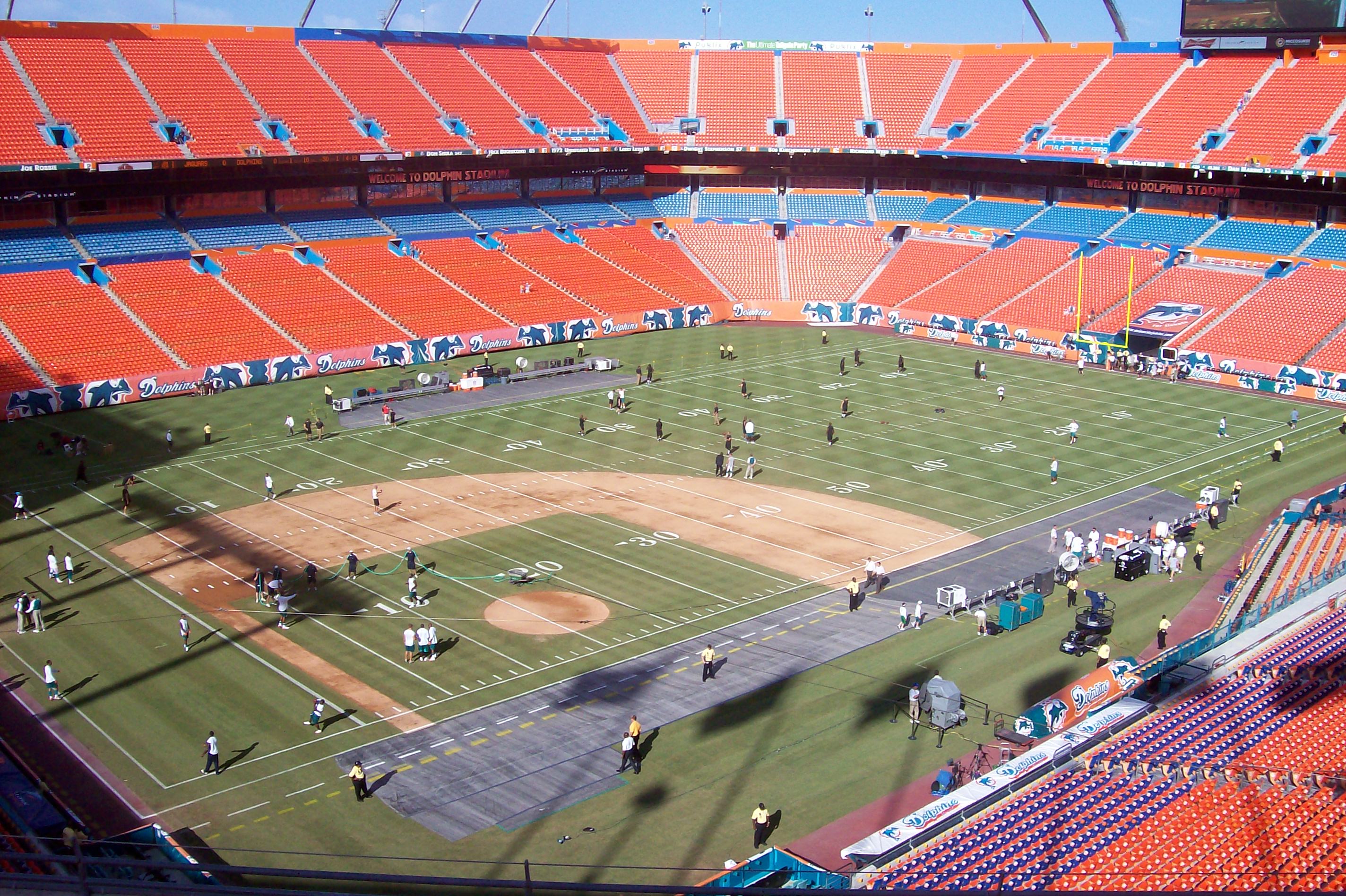
Today’s SachsFact is brought to you by the public affairs, integrated marketing and reputation management experts at Sachs Media Group: As we enjoy the start of another season of Major League Baseball, Florida marks the 22nd anniversary of its Opening Day – April 5, 1993, when the expansion Florida Marlins played their first official game. With Charlie Hough on the Joe Robbie Stadium mound and Jeff Conine going 4-for-4, the Marlins defeated the Los Angeles Dodgers 6-3 to win their inaugural game before a sellout crowd of 42,334. Florida’s second MLB franchise, the Tampa Bay Devil Rays, celebrated their first Opening Day five years later, on April 1, 1998. And now … PLAY BALL!!!
DAYS UNTIL Sine Die – 26; Special Election in SD 6, HD 17 & 24 – 1; Special Election in HD 64 – 15: Jacksonville’s Mayoral Election – 43; Florida’s Presidential Primary: 343; Florida’s 2016 Primary Election: 512; Florida’s 2016 General Election: 582.
JEB BUSH AS INEVITABLE CHOICE? REPUBLICANS SAY NOT SO FAST via Nicholas Confessore and Maggie Haberman of the New York Times
Three months into what allies once confidently described as a “shock and awe” drive to overcome his rivals and dominate the Republican presidential field, Jeb Bush’s early campaigning looks like the juggernaut that wasn’t.
He is grappling with the Republican Party’s prickly and demanding ideological blocs, particularly evangelical leaders and pro-Israel hawks. He is struggling to win over grass-roots activists in Iowa and New Hampshire, states he has visited only a handful of times. And Bush’s undisputed advantage — the millions of dollars streaming rapidly into his political organization — may not be enough to knock out other contenders.
For all the Republican “bundlers” who have signed up to raise money for Mr. Bush, others remain uncommitted or are hedging their bets by aiding more than one candidate. Some are privately chafing at what they view as the Bush camp’s presumption of their loyalty.
Other wealthy donors, mindful of their power to reshape the Republican race with “super PAC” donations, have been more direct: The casino magnate Sheldon Adelson recently made what two people briefed on it described as an “animated” call to one of Mr. Bush’s top supporters after former Secretary of State James A. Baker III, a Bush adviser, criticizedPrime Minister Benjamin Netanyahu of Israel in a speech in March.
It is a far cry, party officials, activists and donors said, from the early success of George W. Bush, Mr. Bush’s brother, in securing the 2000 Republican presidential nomination.
The first primary votes are still nearly 10 months away, giving Mr. Bush’s team plenty of time to adjust, and Republicans show no sign of unifying behind another candidate. Bush’s advisers say he never believed he would be able to clear the field. And they say his refusal to bend to the demands of people whose views he does not share demonstrates that he is running a different type of race.
DATA DU JOUR — BUSH IS STRUGGLING TO BE LIKED ON FACEBOOK See the charts here.
TWEET, TWEET: @MarcACaputo: Rubio’s struggling all the more
EVEN BEFORE PRESIDENTIAL LAUNCH, MARCO RUBIO HAS BUILT NATIONWIDE MONEY MACHINE via Chris Adams of McClatchy DC
Rubio … already has built an operation that brought in cash from all corners of the nation and banked more money than similar congressional fundraising operations.
It’s a good start for the Republican from West Miami, if he expects to compete in a crowded GOP field that will kick off its 2016 presidential race 10 months from now in Iowa and New Hampshire.
So far, most of the attention on fundraising has centered on former Florida Gov. Jeb Bush, who has ambitious goals to collect big establishment money and is presumed to be in position to lap the field in the money race.
Rubio is playing a different game, experts say: He won’t have to match Bush but will need to bring in enough big donors to show he’s a viable presidential candidate.
So far, the first-term senator has built a nationwide network involving three fundraising committees that, combined, took in $14 million during 2013-2014 – a time Rubio had no election himself.
While much of that money already has gone out in support for other candidates as well as for more fundraising, consulting and other expenses, the breadth and scope of his two-year haul demonstrates an ability to raise substantial money – something that will help as his presidential campaign ramps up.
Rubio has three separate fundraising vehicles: his regular Senate campaign committee; what’s known as a leadership political action committee, which raises and spends money often to help other candidates; and a joint committee that takes in contributions and funnels them either to the Senate fund or the leadership PAC.
FLORIDA IS NO LOCK FOR BUSH OR RUBIO via Adam Smith of the Tampa Bay Times
….No Republican since Calvin Coolidge has won the presidency without Florida, and Bush’s Florida-based political team is under no illusions that it will be anything but another epic battle in 2016.
“Any candidate regardless of their connection to Florida has to fight for it to win here,” said Republican consultant Brian Hughes of Tallahassee, who is not working on the Bush or Rubio campaigns. “It’s just the nature of this state. We’re big, we’re diverse, we have a lot of media markets, and it’s really like four states in one. Florida makes you work for it.”
Part of what makes Florida such a challenging state politically is its fast-changing and ever-growing nature. Statewide candidates must constantly introduce themselves. Bush, for instance, won his two gubernatorial races by huge margins — nearly 11 percentage points in 1998 and 13 points in 2002 — but Florida is vastly different now.
The Florida Democratic Party still has the voter files from those Bush elections and can pinpoint which voters are still around and which aren’t. Only 28 percent of currently active Florida voters participated in either of Bush’s past two elections and only 13 percent of today’s registered voters are Republicans who voted in those 2002 or 1998 gubernatorial races.
“There has been so much growth in Florida, that 13 years since his name was last on the ballot, only around 18 percent of registered voters in Florida ever could have voted for Jeb,” Joshua Karp of the Florida Democratic party extrapolated…
POLITICO RANKS RUBIO’S SENATE SEAT 6TH MOST LIKELY TO FLIP Read rankings here
JOE SCARBOROUGH: ’18 SENATE RUN POSSIBLE via Ben Kamisar of the Hill
Former U.S. Rep. and MSNBC “Morning Joe” host Joe Scarborough teased a potential bid for the Senate in 2018 during an interview with conservative radio host Hugh Hewitt.
“I want to get back into service, public service, and hopefully I can do it while a Republican’s at the White House,” he said.
While Scarborough ruled out a bid to replace Sen. Marco Rubio if he decides to vacate his seat and run for president, he floated the possibility of running for Sen. Bill Nelson’s seat in two years.
“In ’18, Bill Nelson’s up, and I don’t think Bill Nelson will be sticking around, so you know, one of these years, I think, one of these years, if I did something, I’d probably look to run in Florida,” he said, stressing that it’s only a possibility.
Scarborough served three full terms in Congress before resigning in 2001 to spend more time with his family. He’s since hosted shows on MSNBC and is currently the co-host of “Morning Joe” on MSNBC.
Because of his political past, he’s at times been rumored as a potential candidate. Public Policy Polling has included him on polls for Florida Senate races. In 2011, PPP’s polling found that Scarborough had a 65 percent approval rating. The poll also found that Scarborough trailed Nelson by 13 percentage points. That margin was, at that time, the best of any Republican candidate tested.
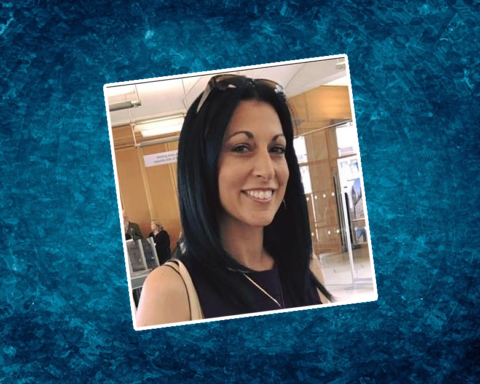
ANNETTE TADDEO TO ANNOUNCE TODAY SHE’S CHALLENGING CARLOS CURBELO IN CD 26 via Patricia Mazzei of the Miami Herald
Barely three months into his congressional career, Miami Republican Rep. Carlos Curbelo has drawn a re-election challenger: Democrat Annette Taddeo, who plans to formally announce her candidacy today.
“This race is not about Carlos. This is about the people of Florida 26 that I strongly believe need a voice in Washington,” Taddeo told the Miami Herald on Sunday, referring to Curbelo’s congressional district. “I’m not aligned with any special interest, and I’m going to Washington to be the voice for the middle class, for the small-business owners, for the working moms.”
Taddeo, who turns 48 on Tuesday, most recently ran for office last year as Charlie Crist’s running mate in the Florida governor’s race.
But Taddeo — who had previously waged unsuccessful campaigns for Miami-Dade County Commission in 2010 and for Congress in 2008 — received statewide publicity, met a wide range of donors and gained valuable political experience.
In 2016, Taddeo would vie for the nation’s most competitive Hispanic-majority district against the freshman Curbelo in a presidential-election year, when more liberal-leaning voters tend to go to the polls. The swing 26th congressional district narrowly favors Democrats, who comprise 35 percent of registered voters, compared to 34 percent Republican and 30 percent without party affiliation.
“This is a very diverse district, and I know it well,” she said. “We have farmers — I grew up on a farm my first seven years. We have a lot of immigrants who are wanting to build the American Dream, and it’s getting harder and harder when special interests and lobbyists are the only voices that I think are being heard in Washington.”
It was Taddeo’s first interview confirming the announcement and a Thursday kickoff fundraiser in Miami with Crist. Her impending plans were first reported Friday by Politico.
GOOD READ — DAVID JOLLY MARKS FIRST YEAR IN OFFICE via Mitch Perry of Florida Politics here.
SHE SAID YES! Laura Donahoe to U.S. Rep. David Jolly on Easter Sunday
PAT NEAL AS FLA’S NEXT CFO? via Adam Smith of the Tampa Bay Times
It’s no longer a matter of if Jeff Atwater runs for U.S. Senate, but when he actually makes it official. That likely happens shortly after Marco Rubio announces his own presidential campaign on April 13. But Atwater won’t have to resign as CFO to run for U.S. Senate because his term does not expire until 2018.
If Atwater wins a U.S. Senate seat, Gov. Scott would appoint his interim successor. And you can bet Scott’s political team already is fielding a lot calls from ambitious Republicans interested not only in the CFO post but also eventually becoming governor.
Because unless your last name is Bush or you have a hundred million of your own money to spend, the most logical path to the governor’s mansion is through the Florida Cabinet. You have to be a lawyer to be attorney general and it’s generally accepted that the agriculture commissioner ought to have some idea of the difference between a Guernsey and a Hereford. That makes CFO the ideal jumping spot for non-lawyers lacking farming experience (although Florida history is loaded with unsuccessful gubernatorial candidates from the Cabinet).
***Today’s SUNBURN is brought to you by Bright House Networks, a trusted provider of industry-leading communications and networking services to businesses of all sizes, from startups to large, multi-site organizations. Our Enterprise Solutions provides the fiber connectivity, cloud and managed services today’s large organizations demand, while our Business Solutions team works with small- to mid-size companies to ensure they get the right services to fit their needs and their budget. Find out why so many businesses in your area trust their communications needs to Bright House Networks. Learn more at brighthouse.com/business.***
RICK SCOTT’S BID TO CUT CORPORATE INCOME TAX STALLS via John Kennedy of the Palm Beach Post
Gov. Scott’s perennial pitch for another cut in the state’s corporate income tax is drawing a familiar response from Florida lawmakers this spring:
No.
So far this session, the business-tax cut hasn’t gained much traction.
It’s been ignored by the House and, while after clearing a couple of Senate committees, now appears stalled.
Scott wants to increase an existing $50,000 exemption on the corporate income tax to $75,000, exempting 2,189 businesses which would save $18.4 million annually.
This is the third straight year Scott has sought the $75,000 exemption, with the idea failing each of the past two sessions. Scott has vowed to wipe out the tax by 2018, although that is looking increasingly less likely.
Lawmakers approved boosting the state’s original $5,000 exemption to $25,000 Scott’s first year in office, and to $50,000 the next. But that’s where it has stayed.
… The corporate reduction alone sought by Scott was priced at $459 million. But that swiftly turned into a non-starter with lawmakers trying to patch-up a recession-wracked spending plan.
The House recently unveiled a $690 million package of tax cuts, the biggest being an embrace of Scott’s proposed $470 million reduction in taxes in phone and television services.
But the corporate income tax reduction didn’t make the list of 17 proposed tax reductions.
TOP TALKER — RICHARD CORCORAN TAKES CENTER STAGE LEADING FLORIDA HOUSE via Michael Van Sickler of the Tampa Bay Times
By 2007, Richard Corcoran was a well-paid and deeply entrenched Florida political operative tied to several House speakers and Gov. Jeb Bush. But, ambitious and restless, he quit his job as chief of staff to House Speaker Marco Rubio to run for office himself.
These days, there’s no doubt that Corcoran has arrived at the apex of power in Florida’s Capitol.
The Land O’Lakes Republican’s official title is appropriations chair in the Florida House. But he’s become the chamber’s de facto leader, eclipsing House Speaker Steve Crisafulli, whose job he’ll assume in 2016.
Case in point: Corcoran holding court moments before he and 85 other representatives approved a $76.2 billion budget that he put together as appropriations chair.
The remarks — bombastic, personal, confrontational — overshadowed anything that Speaker Crisafulli had to add. For observers like Minority Leader Mark Pafford, the message was clear. Corcoran is calling the shots in the House’s rejection of Medicaid expansion, a gambit that could force a budget stalemate and trigger a special session.
Corcoran won’t concede he’s the true power in the House … but in many ways he is.
LAWMAKERS PASS FEW BILLS AS BUDGET QUESTIONS LINGER via Brendan Farrington of the Associated Press
(L)et’s take a look at what (lawmakers) have done with the more than 1,700 bills that have been filed.
They set next year’s presidential primary for March 15. And they’re really, really close to sending Gov. Rick Scott a bill that will let rural mail carriers ride around without their seatbelts.
That’s about it.
Every year the Legislature saves most of its most difficult bills for the session’s final days, but lawmakers usually get more done in the first month than they have this year. Blame it on big budget questions, the styles of the new leaders or maybe just the Tallahassee air that’s thick with pollen.
“A lot of bills have moved through the process, there just haven’t been a lot of bills that have moved all the way through the process,” said Democratic Sen. Jeff Clemens, adding that questions about whether the state will lose more than $1 billion in federal money to help hospitals treat the poor and other budget issues have cooled things a bit. “It’s cast a bit of a pall over the session. Everybody’s trying to figure out how much money we’re going to have and it throws everybody into a little bit of a tailspin.”
Exactly 14 bills have cleared both chambers. The governor has signed five of them. One set the presidential primary date. The other four are reviser’s bills, described in the House glossary as “nonsubstantive” legislation that simply cleans up language in existing laws.
Another procedural measure, the first bill the Legislature passed, just allowed the Senate and House to meet in joint session to listen to Gov. Rick Scott’s State of the State speech.
Among the other eight bills passed is a measure that forces hotels to waive minimum age requirements for members of the military. Another tweaks a law on how insurance companies notify customers about policy changes.
But the Legislature does seem ready to agree on waiving seatbelt requirements for rural mail carriers. The Senate passed the bill unanimously on Day 31 of session and the House version of the bill is before the full chamber. It could go to Scott as early as Thursday.
FLASHBACK TO MY PREDICTION, made January 5: “The Florida Legislature will pass the fewest bills in its history in 2015 as lawmakers punt to an early 2016 session.”
AT SESSION’S HALFWAY POINT, LEGISLATION WITH TRACTION HAS LOBBYING HEFT via Mary Ellen Klas of the Miami Herald
With Florida lawmakers having reached the halfway point of their 60-day session last week, the lineup of legislation with traction looks like a Who’s Who of fundraising and lobbying heft:
▪ Sugar growers, who collectively gave $6 million to the governor, Legislature and both major political parties in the 2014 election cycle, persuaded legislators to block the state from buying land they no longer want to sell for Everglades cleanup.
▪ State worker unions, which contributed $6.8 million to legislators in the last election cycle, and the teachers union, which gave another $2.4 million, kept the Republican-controlled Legislature from reforming the state retirement system.
▪ The powerful HMO industry, which through more than a dozen participating plans contributed $5.6 million to legislators and the governor’s campaign, is poised to compete for multi-million dollar state contracts to provide mental health services.
▪ And, in a sign of how winners and losers are often decided, the for-profit charter schools industry won House approval to draw taxpayer money from public school districts to pay for building construction with little public debate. The industry contributed more than $1 million to legislative coffers.
“Money plays a huge role in what goes on up here” and the issues that “get traction just happen to line up with a lot of those large campaign contributions,” said House Democratic Leader Mark Pafford, D-West Palm Beach. But, he notes, “I don’t think it’s any different than any other year.”
MENTAL-HEALTH REFORM LANGUISHING IN LEGISLATURE via Kate Santich of the Orlando Sentinel
With Florida legislators past the session’s halfway mark, hopes that they’ll agree on any sort of major overhaul for the state’s overwhelmed, underfunded mental-health system are fading fast.
Proposals to educate schoolchildren about mental illness and establish mental-health courts have stalled. And a broad reform bill — tapping more federal funding and allowing more flexibility in treatment options — also opens up the state’s safety-net system to for-profit companies. Many find that troubling.
“I’m so frustrated with the fact that they continue to talk about it and talk about it, and everybody says, ‘We have to do something about this mental-health crisis’ — and then they do nothing,” says Candice Crawford, CEO of the Mental Health Association of Central Florida, a consumer group. “Sadly, I just think there’s no constituency around mental-health issues to even make an impact at that level.”
When the legislative session opened March 3, talk of reform was rampant. Lawmakers said they were moved by highly publicized tragedies — including a mentally ill father who threw his 5-year-old daughter off a Tampa Bay bridge and a mentally ill inmate in South Florida who was left to die when guards allegedly put him in a locked, 180-degree shower for punishment.
And they worried publicly that an increasing share of the state’s mental-health budget was being spent on treating prisoners so that they are mentally competent to stand trial, leaving other Florida residents with little chance of getting their own mental-health concerns treated.
The result? There have been 22 bills addressing mental-health needs introduced so far — so many that anyone trying to follow the action could have trouble keeping up. And in most cases, the House and Senate disagree on what needs to be done.
SENATE LOOKING TO FOLD ON GAMBLING TALK, EXTEND COMPACT ONE YEAR via John Kennedy of the Palm Beach Post
With a top House Republican promoting a sweeping overhaul of Florida’s gambling law, the Senate countered with a much lower-stakes proposal.
Senate Regulated Industries Chairman Rob Bradley said lawmakers should backburner the House’s gambling idea and just extend the existing compact with the Seminole Tribe another year.
A portion of the state’s compact with the Seminole Tribe is expiring in July. That’s added a fresh level of uncertainty to this year’s version of the Legislature’s annual gambling debate.
House Majority Leader Dana Young used the expiring compact as fuel for sweeping action on gambling with a bill that would open South Florida to casinos, add slot machines in Palm Beach County and change the state’s regulatory structure over the industry.
Young’s bill was recently workshopped in a House committee. But drawing a wide range of criticism, it’s prospects haven’t looked good. Bradley’s new proposal signals where Senate President Andy Gardiner, R-Orlando, a gambling opponent, is looking to go — and it certainly isn’t toward a big industry rewrite this spring.
The compact giving the Seminoles exclusive rights to blackjack and table games at their casinos brought almost $300 million into the state treasury this year.
But House and Senate budgets have been put together for 2015-16 without any projected income from tribal gambling — as legislative leaders quietly have attempted to negotiate a new deal.
SENTINEL EDITORIAL “Scott, lawmakers should renew the Seminole pact“
TWEET, TWEET: @Fineout: 1 note on Senate compact extension. @Rob_Bradley is doing a bill. Some argued it can be done by resolution – which is not subject to veto
BILL TO PROTECT ‘DIGITAL ASSETS’ AFTER DEATH CLEARS ANOTHER COMMITTEE via James Rosica of the Tampa Tribune
A second committee has cleared a Senate bill that would ensure “digital assets” could be controlled by someone who will protect them after death.
The Fiscal Policy committee … OK’d the bill (SB 102) on a 7-4 vote. It next heads to Rules before it can be heard on the floor.
The bill aims to ensure someone can gather monetary assets, like online brokerage accounts, that may have to be passed on, according to its sponsor, state Sen. Dorothy Hukill.
It also would grant control over a person’s social media pages and make sure they’re preserved and not defaced.
Since 2005, at least nine states have enacted laws that allow for some level of control of digital assets after death, according to the National Conference of State Legislatures.
A House companion (HB 313) is slated to be considered by that chamber’s Insurance and Banking subcommittee.
STATE-WORKER RAISES STILL ON THE TABLE via Jeff Burlew of the Tallahassee Democrat
Given huge uncertainties in Florida’s budget over a proposed Medicaid expansion and the possible loss of federal hospital funding, it’s anybody’s guess whether state employees will get a raise this year.
Across-the-board raises were not included in budget proposals offered by Gov. Scott or the House and Senate. Only the House budget has any money for raises, enough to give about 700 state firefighters a pay boost of $1,000.
But that doesn’t necessarily mean raises won’t happen. Behind the scenes, union reps are making their case for raises, as they do each year. And some lawmakers say they remain on the table.
“I’m feeling optimistic for state employees right now,” said Sen. Thad Altman and a member of the Senate Appropriations Committee. “For some reason — I can’t really say why — I just have that feeling. They deserve it.”
The issue is almost always decided at the end of the legislative session, when House and Senate leaders reconcile and balance the budget they send to the governor — the one thing they must accomplish.
“I think everything is open,” said Sen. Greg Evers. “I don’t think the door is closed on anything. And I think it’s something that will go to negotiation when we go to conference.”
TWEET, TWEET: @MearKat00: I just received my jury summons for May 1, the last day of the Legislative Session.
GUN RIGHTS GROUP UPSET WITH UNIVERSITY POLICE CHIEFS OPPOSED TO CAMPUS GUN LEGISLATION via Tia Mitchell of the Florida Times-Union
A Florida gun-rights group says it has filed ethics complaints against 10 university police chiefs, including the University of North Florida’s Frank Mackesy, related to their willingness to testify against “guns on campus” legislation.
Mackesy and his law enforcement colleagues traveled to the Capitol on March 16 to testify against Senate Bill 176, a proposal to allow people with concealed carry permits to bring their weapons on college and university grounds. Because of time constraints, Mackesy never got a chance to speak.
But he and the others filled out public comment cards indicating their opposition to the bill.
Florida Carry, a gun-rights group that supports the bill, filed a complaint with the Florida Ethics Commission alleging that the police chiefs should have registered as lobbyists if they were going to take a position on legislation while in their official capacity as state employees.
Scott Barrish, a Florida Carry member who lives in the Tampa Bay area, had sent each state university a series of public record requests over the past couple of weeks asking for leave documentation, mileage and expense reports submitted by the police chiefs and other employees on the days they signed up to testify before various committees where SB 176 or companion House Bill 4005 were on the agenda.
“We believe that taxpayer dollars should not be used to lobby against the Second Amendment rights of Floridians,” said Eric Friday, the group’s Jacksonville-based general counsel.
U.S. SUGAR ASKS: ISN’T PAYING ACTORS TO PROTEST THE SAME AS PAYING TRAVEL AND LODGING? via Christine Stapleton of the Palm Beach Post
A day after an anonymous opponent of the U.S. Sugar land deal paid $75 to actors to protest at the South Florida Water Management district, comes word that the Everglades Coalition – strong backers of the deal – are providing free transportation and hotel rooms for college students who want to travel to Tallahassee for the Third Annual Everglades Day and Action Rally on April 7.
Besides sending “strong message” to lawmakers to “Buy The Land!” and “Send Water South,” the college students and other advocates on the bus will likely have good seats to a free concert by Jimmy Buffett and commentary from best-selling author Carl Hiaasen.
The charter buses will leave from Miami, West Palm Beach Stuart and Fort Myers on April 6. After a group dinner, the travelers will meet other advocates. April 7 begins with lobby training before meeting with lawmakers, followed by the concert and rally at the Capitol and the drive home.
At issue is an option that would allow the South Florida Water Management District to purchase 46,800 acres of land south of Lake Okeechobee from U.S. Sugar to store water for restoration projects. The estimated price tag: $500 million.
U.S. Sugar does not want to sell the land. The district has expressed little interest. The option expires in October.
Although other advocates who will ride the bus and attend events at the capital will pay their way, the free excursion for college students has Judy Sanchez, Senior Director of Corporate Communications & Public Affairs at U.S. Sugar questioning how the paying for the travel tab of college students is different from paying actors to protest.
“Just wondering why the Everglades folks have never been called out for doing the same thing,” Sanchez wrote in email after reading about Thursday’s protest. “Providing free bus fare to Tally ($100?) and free hotel room ($150) to a bunch of college students and putting them through “lobby training” to have them learn your message –oh and then you throw in a free Jimmy Buffett concert ($100+)—that’s not buying people to show up at your rally?”
ICYMI — BIG SUNDAY READS
DWINDLING OYSTER SUPPLY THREATENS FLORIDA TOWN’S ECONOMY via Melissa Nelson-Gabriel of AP
Five generations of Philip Vinson’s family have labored using tongs to pull oysters from Apalachicola Bay’s shallow waters. He fears there won’t be a sixth.
The local oyster industry is under threat from water-flow issues, environmental concerns, health and safety regulations and economic realities. Restaurants from New Orleans to Tampa and beyond tout Apalachicola oysters as the tastiest oysters around, but the annual harvest has been in decline.
Apalachicola-based oyster houses have either stopped selling to restaurants on the wholesale market or have opted to supplement their supply with oysters from Texas and Louisiana.
“From generation to generation, we have worked here in this paradise and we are proud of our oysters, we take pride that it means something when the oysters come from here,” Vinson said, describing the local catch as “the best oysters in the world. They are sweet with the perfect blend of salinity in the water.”
When oyster harvesting was at its peak, harvesters could earn more than a thousand dollars a week, he said. Now it is about half that.
“It is definitely not like it used to be. This use to be a very high-paying job,” he said. “I honestly don’t see the next generation making it out here.”
That decline shows in Apalachicola, which sits on the river of the same name, 75 miles southwest of Tallahassee. It is on the Florida Panhandle near the Big Bend – the juncture of where the west coast of the Florida peninsula makes its turn to the west.
A fishing village of about 2,500 people, it gives visitors a rare glimpse of Florida coastline not dotted with high-rise condominiums, amusement parks and T-shirt shops. Instead, the waterfront is lined with small oyster processing houses, boat ramps and side roads lined with the small, often-dilapidated boats used by the oystermen who work the shallow bay. The town boasts historic Southern homes with wide front porches and Spanish moss and magnolia trees growing in the yards.
Nowadays, many of the oyster houses are abandoned and fewer oyster boats comprise the flotilla that meanders across the bay early each morning.
FLAKKA: RAMPANT DESIGNER DRUG DUBBED $5 INSANITY via Tonya Alanez of the Sun Sentinel
Like bath salts before it, a new synthetic designer street drug called flakka is unleashing maniacal paranoia, rage and delirium on South Florida’s streets.
Since January, flakka has given rise to a naked gunman on a Lake Worth rooftop, a man trying to kick in a glass door at the Fort Lauderdale police station, another who impaled himself when he attempted to scale a security fence at the Fort Lauderdale station because he was trying to escape murderers, and yet another who left a trail of blood after attacking an 82-year-old Riviera Beach woman in her home.
“Longtime addicts who have tried flakka, they’re terrified of it,” said Don Maines, a treatment counselor for Broward Sheriff’s Office community programs and vice president of the Broward Addiction Recovery Center’s advisory board. “They can’t think straight, they’re paranoid, they think people are chasing them. One guy thought he was surrounded by German shepherds that were attacking him.”
Flakka occurrences have risen at an alarming rate, with Florida crime labs analyzing zero flakka cases in 2010, 85 in 2012 and more than 670 in 2014, according to the U.S. Drug Enforcement Administration.
To combat the rising tide, South Florida law enforcement agencies are training their officers how to identify people high on flakka, creating task forces and linking arms with local and federal agencies.
An illegal, controlled substance, flakka comes in a crystalline rock form and can be smoked, snorted, swallowed in capsules or injected. It can sell for as cheap as $5 a hit, and its effects can last from three hours to three days.
One user branded it “$5 insanity,” Maines said. “This is as bad as it gets.”
FLORIDA’S PRISTINE CORAL REEFS THREATENED BY CLIMATE CHANGE via the Associated Press.
A new study shows that Florida’s pristine coral reefs are under a growing threat from climate change.
(According to) a National Ocean and Atmospheric Administration study … some reefs could be damaged about a dozen years earlier than previously projected. The study found coral bleaching caused by warmer waters could harms sections of the Dry Tortugas reef tract and reefs in areas off the middle Keys as early as 2030.
Bleaching is potentially deadly to colorful corals and the many creatures that thrive inside coral reef habitats.
The scientists used a supercomputer to crunch data on sea temperatures around the Gulf of Mexico and Caribbean already identified as vulnerable to bleaching outbreaks. Their findings confirmed that bleaching could be widespread by mid-century and revealed the bleaching might start to show sooner in some areas than others.
Scientists consider reefs an important earlier indicator of more serious trouble.
Decades of coastal run-off, fishing and anchors have already done heavy damage, shrinking Florida’s reefs to a fraction of their historic range. Swings in temperature add to the stress. Cold water can kill tropical reef gardens. But increases in temperature, even slight ones, can cause coral to spit out life-sustaining algae. Acidification, another malady linked to climate change and rising carbon in oceans, could also weaken reefs.
Until now, bleaching has occurred periodically, but never regularly. Cool weather, like the recent cool front, give reefs a respite and chance to rebound.
PERSONNEL NOTE – GARY CLARK APPOINTED DEP DEPUTY SECRETARY OF LAND AND RECREATION Full story here
Florida Department of Environmental Protection Secretary Jon Steverson has appointed Gary Clark as deputy secretary of land and recreation. In this role, Clark will supervise the Divisions of State Lands and Recreation and Parks.
“Gary brings a broad range of management experience, leadership skills and investment expertise to this position,” said Steverson in a statement. “He will be a tremendous asset to the state and department.”
Clark most recently served as vice president of member services for the West Florida Electric Cooperative Association, where he was responsible for managing all marketing, communication, governmental affairs, public relations and economic development programs for a 26,000 consumer rural electric cooperative. In addition, he is director and shareholder of Community Bank in Chipley and co-owns several enterprises.
ACTUAL PRESS RELEASE from the Florida Fish & Wildlife Commission – “All turtles are not equal; the gopher tortoise lives on land so don’t ‘help’ it into water.”
TRAVIS HUTSON, PAUL RENNER PAD CAMPAIGN ACCOUNTS IN ADVANCE OF SPECIAL ELECTIONS Full story here
As the special election in House District 24 approaches, Paul Renner finishes the campaign with a substantial fundraising lead. The Palm Coast Republican added $56,210 from March 1 through April 2, according to the state Division of Elections. Renner raised $294,340 overall, spending $261,748. HD 24 covers Flagler County and sections of St. Johns and Volusia counties.
In the same period, Renner’s Democratic opponent, Adam Morley of St. Augustine, raised $1,506, for an overall total of $4,559.
Both Renner and Morley seek the seat held by Rep. Travis Hutson, the Elkton Republican who is running in the special election for the Senate District 6, which covers parts of St. Johns, Flagler, Putnam and Volusia Counties. St. Augustine Republican John Thrasher resigned the Legislature in November to become Florida State University president.
Hutson took in $13,000 on March 2, the last day he could fundraise, for a total of $399,905, according to the state Division of Elections. As a sitting lawmaker, Hutson cannot raise money during the legislative session starting March 3. The updated report from Hutson’s Democratic opponent, David Cox of Daytona Beach, was pending as of Friday evening. Cox did raise $450 through Feb. 28.
CYNDI STEVENSON RAKES IN CASH FOR RACE VS. 2 TOMATO CANS Full story here
As early voting ends in the Northeast Florida special legislative election for House District 17, candidate Cyndi Stevenson added to her fundraising advantage, according to the state Division of Elections website. Stevenson, a St. Johns County Republican, is seeking to replace Republican Rep. Ronald “Doc” Renuart from Ponte Vedra Beach.
From March 1 through this week, Stevenson added $58,673 for an overall total of $169,596, spending $149,495. She faces Judy Stevens, a no-party candidate, and write-in Mary Anne Boczek.
The state called a special election after Renuart chose to run the Senate seat held by former Sen. John Thrasher, a St. Augustine Republican. Thrasher vacated the seat last year to become president of Florida State University.
Campaign-finance information for Stevens and Boczek is still pending as of Friday, although through Feb. 28, Stevens raised $1,000; Boczek raised no money.
Voters will also choose the replacement for Thrasher in Senate District 6, as well as the successor for Republican Rep. Travis Hutson of Elkton in House District 24. Hutson won the Republican primary for SD6 in January. To run for the Senate, both Hutson and Renuart resigned from the House.
GOP CANDIDATES LINE UP TO REPLACE JANET ADKINS IN HD 11 Full story here
GOP candidates are lining up to succeed Rep. Janet Adkins, the Fernandina Beach Republican from House District 11 who faces term limits next year.
Barry Holloway, a Bryceville Republican, filed a campaign account this week to become the fifth Republican in the HD 11 race, according to the state Division of Elections.
A GOP stronghold, the district includes Nassau and part of Duval Counties; no Democrats have yet filed for the 2016 race. Republicans Cord Byrd, Richard Clark, Tom Taylor and Sheri Treadwell are the remaining candidates.
4TH FLOOR FILES talk to Kirk Pepper about creating wealth, fixing problems, and being nice. Here’s the file on Kirk.
CITIZEN LOBBYISTS SEEK TO BE HEARD IN FLORIDA’S CAPITOL via Steve Bousquet of the Tampa Bay Times
They don’t wear expensive suits or carry high-end handbags … can’t afford to make campaign contributions … wouldn’t know how to casually text a senator on his cellphone before a key vote, the way well-connected lobbyists do.
But they too demand and deserve a voice in state government.
They are Florida’s citizen lobbyists, patrolling the halls of the Capitol in Tallahassee and advocating for change, one issue at a time and one lawmaker at a time.
On any given day, they might include farmworkers, feminists, Republican women, college students, small business owners, union members, animal rights activists, undocumented immigrants and parents of children with unique challenges — along with their kids, who often are the most likeable lobbyists of all.
The problem with Tallahassee is that there are too few real people around, and for those who are there, it can be frustrating to navigate a confusing world of amendments and appropriations. The citizen lobbyists who walked the halls in recent days were participating in a democracy that for many others is literally beyond reach.
“This process kicks people out because it’s so hard to get here,” said Rep. Mark Pafford, the House Democratic leader.
NEW LOBBYING REGISTRATIONS
Erika Alba, Jonathan Kilman, Paul Lowell, Jon Yapo, Foley & Lardner: Columbia Care
Brian Ballard, Christopher Hansen, Ballard Partners: Ultimate Health Plans
Matthew Blair, Corcoran & Johnston: Javier Soria
Ashley Boxer: South Broward Hospital District
Alison Dudley, A. B. Dudley & Associates: Citizens Against Rail Expansion in Florida
Marty Fiorentino, Thomas Griffin, Joseph Mobley, Mark Pinto, Fiorentino Group: Ventura Ranch
John Grosskopf: North Florida Community College
Erik Kirk, Kirk Consulting Group: Kyra Info Tech
Matthew Leopold, Carlton Fields Jorden Burt: The Villages
Lisa Miller, Lisa Miller & Associates: SkyeTec
JEB BIOGRAPHER S.V. DATE LEAVES NPR Full story here
Shirish “S.V.” Dáte, the former Tallahassee bureau chief of the Palm Beach Post, is stepping down as editor of the Washington Desk at National Public Radio.
Before his time at NPR, Dáte made his name for his aggressive reporting on former Gov. Jeb Bush – which became the book Jeb: America’s Next Bush.
Dáte made the announcement in a Friday email to his colleagues.
CONTEXT FLORIDA: ENVIRONMENTAL DISAPPOINTMENTS, LORETTA LYNCH, SKIP FOSTER AND HEALTHCARE
On Context Florida: What began as the “year of the environment” for the 2015 legislative session has turned into a year of disappointment for many environmentalists, says Bruce Ritchie. Mark Ferrulo notes that the time the U.S. Senate heads back to Washington, D.C., after a two-week recess, President Barack Obama’s U.S. attorney general nominee Loretta Lynch will have been waiting more than five months for her nomination to be attorney general to be confirmed, the longest any attorney general nominee has waited in three decades. Skip Foster, the new publisher at the Tallahassee Democrat, was greeted as a liberator in his maiden speech to the Capital Tiger Bay Club, reports Florence Snyder. The gray-haired eminences who make up the Club’s membership know the difference between a good newspaper and a Chamber of Commerce rag. As the president and CEO of the Florida State Hispanic Chamber of Commerce, Julio Fuentes speaks to business owners and leaders every day, hearing their concerns over healthcare coverage in our state. It is why the Hispanic Chamber stands with A Healthy Florida Works to bring the tax dollars sent to Washington, D.C., back to Florida to extend healthcare coverage to approximately 1 million uninsured Floridians.
Visit Context Florida to dig in.
GATORS STILL NO. 1, BUT UCF IS EVEN WITH MIAMI AS 3RD-MOST POPULAR FOOTBALL PROGRAM IN STATE via Mike Bianchi of the Orlando Sentinel
Florida State Seminoles are nearly as popular as the Florida Gators in a recent statewide poll, but the biggest shock is UCF has drawn even with the University of Miami as the third-most popular college football team in the state.
Florida, the state’s oldest and richest university, has traditionally had the largest fan following in the state, but the Gators’ prolonged slide and the Seminoles’ recent run has made the two schools virtually even. In a recent Public Policy Polling survey, Florida was the state’s most popular college program with 23 percent of respondents choosing the Gators as their favorite college team with FSU trailing by a gnat’s eyelash and garnering 22 percent of the votes.
But the most startling result on the survey was that UCF and Miami were tied for third with 10 percent, followed by USF with 8 percent.
Miami, once one of the most dominant, dynastic programs in college football history, hasn’t been relevant on a national scale in more than decade. Meanwhile, up-and-coming UCF, which has the second-largest enrollment of any school in the nation, emerged on the national scene two years ago with a victory over Baylor in the Fiesta Bowl.
SPOTTED: Tom Cruise at the UConn-Maryland women’s Final Four game in Tampa.
HERE’S WHAT TO WATCH FOR IN DUKE-WISCONSIN NATIONAL TITLE GAME
Duke is the four-time national champion accustomed to playing in the spotlight this time of year. Wisconsin is the plucky upstart that won its only championship in 1941.
The two will meet with everything at stake Monday night.
Here are some early things to keep in mind as the Badgers and Blue Devils prepare to meet:
— Quick turnaround: With just 48 hours between the semifinals and championship, how quickly the two teams can turn their focus to Monday night could prove to be critical.
— Star showdown: Kaminsky outplayed Okafor when the teams met in December. Frank the Tank finished with 17 points in the losing effort, while Okafor was held to just 13 points.
— Coaching matchup: Krzyzewski and Ryan are considered two of the best coaches in college basketball, and both of them have the national championship rings to prove it. Coach K has won all four of his with the Blue Devils, of course. But people tend to forget that Ryan won four national titles of his own at Division III Wisconsin-Platteville.
— Hoosier hospitality: The Blue Devils have a bit of history on their side: When they reached the title game in Indianapolis in 1991 and 2010, they wound up winning the championship.
NETFLIX DEALS HOUSE OF CARDS A FOURTH SEASON via Lance Whitney of CNet.com
The Underwoods will be back in office next year when Netflix’s “House of Cards” embarks on a fourth season.
The show’s renewal was revealed by a tweet from Netflix displaying a black image with an upside down American flag and the words: “Season 4 Coming 2016.” Above the image is a line that says: “I will leave a legacy” with the hashtag #Underwood2016.
Netflix’s tweet didn’t reveal any other details, such as when the fourth season would start its term. But this year’s season began on February 27 and featured the usual number of 13 episodes. The fourth season will carry a certain irony as it will debut the same year the US will hold a real election to decide the next president.
HAPPY BIRTHDAY to Rosemary Curtiss, former state Rep. Jim Frishe, Carolyn Johnson, Chelsea Murphy of Adams Street Advocates and the Sarasota Herald-Tribune‘s Jeremy Wallace.