Ron Christaldi, chairman of the Greater Tampa Chamber of Commerce, said today that back in 2013, a half-dozen members of the chamber visited with Vice President Joe Biden and other White House officials to discuss the potential for business with Cuba.
“They asked me about what the business community wanted and were we ready to take advantage of those opportunities,” he told an audience who gathered in a ballroom inside the Tampa Airport Marriott Hotel. “There’s 17 million people in Cuba. That’s a pretty big market.”
Christaldi said that he realized when he saw President Obama address the nation in December on normalizing relations with Cuba that local officials in Tampa had definitely affected the president’s decision. “That trip that we made to the White House … had an impact on foreign policy. Everyone in this room has that opportunity. Together we’re a strong voice, and together we can impact what is happening.”
It’s certainly not a stretch to say that there’s not a city in the U.S. more collectively enthused about Obama’s diplomatic breakthrough with the communist island than in Tampa, which has maintained historical ties to the island nation going back over a hundred years.
The Chamber has endorsed bringing a Cuban consulate to Tampa, and will be taking another delegation to the island in May.
The Chamber, Tampa International Airport and U.S. Rep. Kathy Castor organized today’s forum on Cuba. The airport has been an enthusiastic partner championing outreach to Cuba going back to 2011, after the president added Tampa to the list of airports that could begin taking passengers back and forth to the island.
Tampa International Airport CEO Joe Lopano said that prior to Obama’s announcement, a website that the airport created to generate interest in those trips — gotoCuba.org — received about 50 visitors a day. Now he says it averages over 850 a day. “And we hope to establish Tampa as the country’s best gateway.”
While the negotiations between diplomats have gone relatively slow since that big announcement, officials with the Commerce and Treasury Department appeared on a panel to answer questions from the audience.
Those officials emphasized while the travel policies that went into effect in January now make it easier than at any previous time for an American to travel to Cuba, tourism is still banned by the economic embargo. Any American wishing to visit Cuba for one of 12 purposes may now do so without having to apply for a license on a case-by-case basis. The 12 categories of legal travel to Cuba include visits to close relatives, academic programs for which students receive credits, professional research, journalistic or religious activities, and participation in public performances or sports competitions.
“As I’m sure you’re all aware, we can’t suspend or terminate the embargo,” reminded Jennifer Hershfang, assistant chief counsel with OFA. “I think that everybody would feel comfortable if we were close to that. But that’s the ultimate and final edge that we can go.”
Some questions were quite simple. Tampa accountant and Chamber official Jose Valiente will be part of the Chamber’s trip this coming May. He wanted to know if he’d be able to use a credit card on that trip.
“Yes, credit cards are authorized,” responded Davin Blackborow, assistant director for licensing with the Office of Foreign Assets Control (OFAC). “There’s a practical question about whether the infrastructure supports using those credit cards and whether the U.S. banks are set up to handle those transactions. And that’s something I can’t answer.”
But Tessie Aral, CEO of ABC Charters, a company that has been flying Tampa residents and others to Cuba for years now, said that American banks don’t understand general licenses for people to travel to Cuba now. “I don’t believe the banking system understands the changes that (the) wonderful Obama administration has done,” she complained.
Although virtually everyone in attendance appeared to be eager to have trade and travel relaxed with Cuba, there were some critics of the Castro government in the house.
Tampa attorney Pedro Fuentes-Cid was jailed for activism in Cuba for 16 years. “I must tell you there is a great worry among Cuban-Americans here in the U.S, and inside Cuba. Not enough attention has been paid to the human rights abuses in Castro,” he said, bringing a dose of reality to the Cuban situation, and sobering those who wonder why the Obama administration’s moves haven’t met with universal love across the country.
“Talk to the people that are out on the streets,” he told the officials. “Talk to them. Get their opinions. They matter. They are the people.”
“We really appreciate those comments,” replied Matthew Borman, deputy assistant secretary, Bureau of Industry and Security at the Department of Commerce. While saying the issue is something that a State Department official is better prepared to answer, Borman said that “I know that human rights is still a very important issue for the government.”
“Make no mistake. The Cuban government is nowhere near where it needs to be when it comes to human rights,” responded U.S. Rep. Kathy Castor. “The policy of isolation and the embargo over 50 years never changed that situation, so we’ve gotta change something new.”
The forum was kicked off with a speech from Commerce Department Secretary Penny Pritzker, who said that President Obama’s new policy “is designed to help Cuban citizens become more connected to the world outside their shores and improve their standard of living. Gradually, our actions should give all Cubans an opportunity for greater economic independence. ”
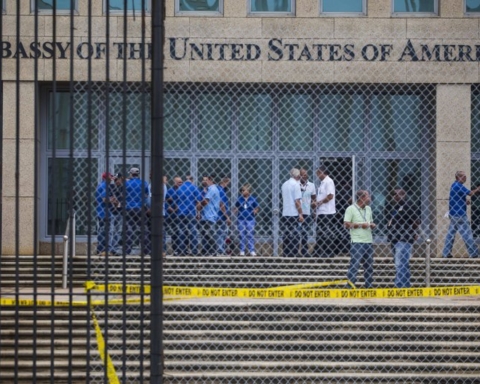
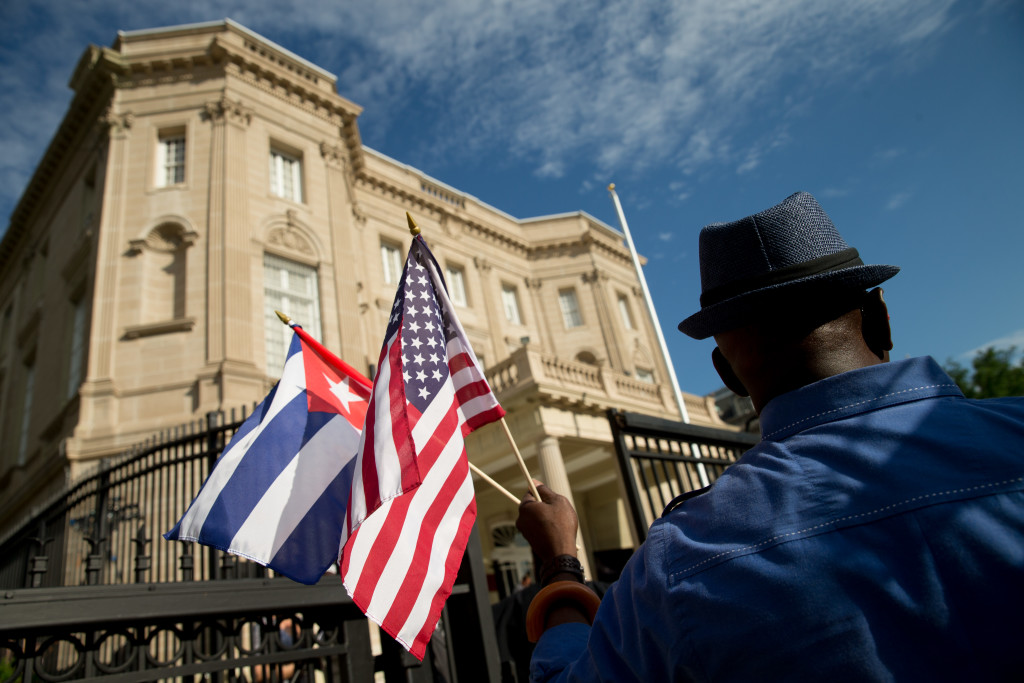
U.S. and Cuban officials are set to meet for a fourth time since the diplomatic breakthrough in December to discuss human rights issues and telecommunications policies. President Obama has said he hopes the two countries can reopen embassies in each other’s capitals before the Summit of the Americas in Panama next month.