The Senate Transportation Committee heard testimony from staff of two state agencies and a circuit court judge on Thursday morning as it continued to seek answers when it comes to a Florida licensure regime previous witnesses have called “cruel.”
Chairman Jeff Brandes wrote a handful of key administrators last month declaring, “It is the intent of the committee to produce a substantive bill to reform the inequities in the practice of driver license suspension.”
Toward that end Brandes, a St. Petersburg Republican, called on Byron Brown, chief legislative analyst with the Office of Program Policy Analysis and Government Accountability, or OPPAGA as is it is known in Capitol-speak.
Brown’s testimony shed light on a central aspect of Brandes’ drive for reform of the state’s policy on license suspensions: most people are suspended for reasons unrelated to public safety.
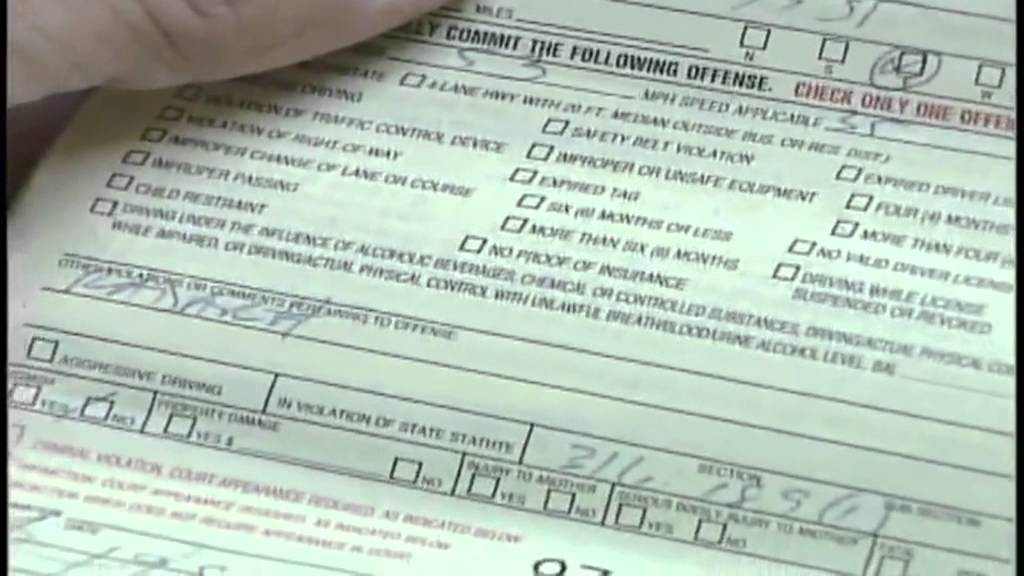
An agency data review requested by Brandes revealed that of the some 1.3 million suspensions or revocations meted out to drivers in FY 2012-2013, about a million — just under 80 percent — were for failure to pay a traffic fine or complete a court-ordered driving course.
Just 86,196 licenses, or fewer than seven percent, were suspended for public safety reasons like driving under the influence or causing harm to people or property.
Some 167,267 licenses were suspended for reasons completely divorced from driving at all, the focus of the OPPAGA report.
Among these, the most common reasons were overdue state fines, failure to pay child support, felony drug offenses — which come with a mandatory revocation upon conviction — school truancy, worthless check charges and theft offenses.
The most common length of these suspensions in Florida was one year, double the federal requirement of six months.
These suspensions are a major source of income for the judiciary, a fact not lost on Trilby state Sen. Wilton Simpson, who inquired about the issue to Judge Augustus Aikens of the state’s 2nd Circuit Court, who also testified before the committee.
“Do you have any ideas, if we were to reduce the suspensions… What would we do then to collect all the money and fees in that area?” asked Simpson.
Aikens responded that it was a question more for the court clerks than for a judge, but that he did have experience on the bench in collections court.
“The problem is we were just incarcerating people that just didn’t have the ability to pay,” said the judge, who was scheduled to preside over arraignment proceedings later that day. “Many of them will admit that they knew their license was suspended, they were just trying to get to work. They couldn’t pay the cost and fines,” adding that for many charges, there is no business purposes-only license, an option Brandes seemed apt to expand.