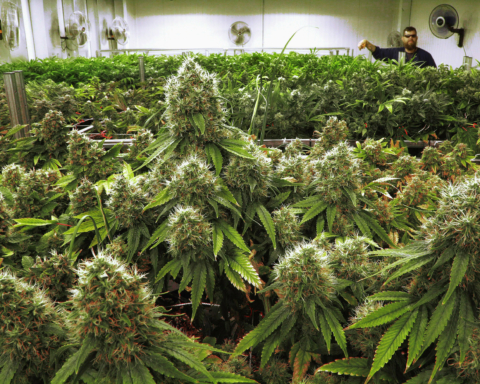
A Charlotte’s Web fix cleared its second Senate committee this week while drawing fire from patient advocates and black farmers for failing to increase permissible THC levels and discriminatory licensing requirements. State Sen. Rob Bradley is asking his colleagues to keep the bill moving while he continues discussions with stakeholders.
Patient advocates’ concerns about the state’s inability to implement a medicinal marijuana law now includes the fact that there is no House bill addressing the problems in the law that has drawn numerous legal challenges and has prevented the planting of Florida’s first legal marijuana crop.
“For thousands of Florida families, this issue means the difference between life or death. This cannot wait another year,” said Ryan Wiggins, spokesperson for the Moseley family. Holley Moseley was among the “momma bear”-lobbying brigade that a year ago convinced the Florida Legislature to authorize the use of cannabis oil to treat their children’s epilepsy and cancer. “We are pleading to the House to keep the promise they made to these families last year. It is our sincere hope that the Speaker shows the same level of compassion this year that was shown last year and makes saving the lives of vulnerable children and families a priority.”
If Bradley is able to get his Charlotte’s fix through the Senate there are different ways his House allies can get the bill to the floor. Bradley said he’s engaged in conversations with House members who have supported Charlotte’s Web in the past.
“In this process a lot of times one chamber takes the lead over another,” said state Rep. Alan Williams. “We’ll have an opportunity to have the discussion once the Senate takes up its version.”
Williams said one of the items he wants discussed is the charge from the Black Farmers Association that eligibility requirements for Charlotte’s Web licenses are discriminatory. The law requires a nursery to have been in operation for 30 years and the BFA argues there were no black nurseries 30 years ago because of institutional racism.
“We want to make sure we put forward an equitable process because there is profit to be made in this,” said Williams. “We want to make sure that everyone has a fair shot at this. I want to make sure we work with all farmers regardless of race.”
Earlier I stopped a lawyer in a Capitol hallway who was involved in the lawsuit invalidating a proposed regulatory structure for the medicinal marijuana law. The attorney doesn’t speak to the media for attribution but is a good provider of background information. I pigeonholed him about the latest twists in Charlotte’s Web’s journey from state statute to reality — the actual planting of marijuana and the start of a medicinal marijuana industry.
We discussed the BFA complaint, the demand for higher permissible levels of THC and the lack a House companion bill and the notion that if lawmakers were really frustrated with challenges to Department of Health proposed rules then why not pass the rules as a law — it was an impromptu geek fest for public policy nerds.
Looking at his watch, he begged off the conversation, citing a meeting.
“We’re really getting into the weeds on this,” he said laughing while disappearing around the corner.
“Four weeks to go; an eon in a legislative session,” said Louis Rotundo of the Florida Medical Cannabis Association. Rotundo has attended all the public hearings and workshops held on Charlotte’s Web since last summer.
“There’s enough time on the clock to get this done,” Rotundo said, standing outside of the House chamber waiting for lawmakers.