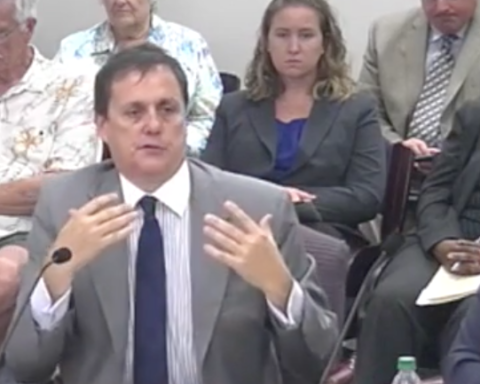
With virtually no debate, the Florida House Insurance and Banking Committee passed the so-called Right to Try Act today. The legislation would let terminally ill patients access experimental drugs.
Similiar legislation has spread like wildfire across the country, as 10 states in the nation have recently approved such laws, and another 29 (including Florida) are discussing it in their respective state legislatures this year.
Sarasota Republican Ray Pilon explained to committee members that a patient must have a series of permissions and forms signed by a doctor that would allow the manufacturer to provide the drugs. The legislation does not mandate that a healthcare provider must pay for such drugs. It also protects physicians from revocations, suspensions or denial of renewal based solely on the doctor’s recommendation of the drugs.
Pilon said that rather than have people travel to Mexico or “go to some dark corner and buy snake oil, which may work for them,” the state has the obligation to allow their citizens to have the ability to access drugs that could keep them alive longer.
Drugs and medical devices undergo three phases of clinical trials before they go to the Food and Drug Administration for review and, if approved, hit the market. The process can take more than a decade and costs pharmaceutical companies $1.2 billion per drug. Right-to-Try laws cut out that process.
But critics say it undermines the FDA’s approval process, and patients could be putting themselves in harm’s way.
Pilon’s bill allows patients to request drugs that have passed the first clinical trial stage – the one during which scientists determine whether a drug hurts people, not whether it can cure them.
It passed without opposition this morning in the House Insurance and Banking Committee. St. Petersburg state Sen. Jeff Brandes is sponsoring its companion bill in the state Senate.
Yesterday in Indiana, Gov. Mike Pence signed a bill into law making the Hoosier State just the latest jurisdiction to legalize a right-to-try law.